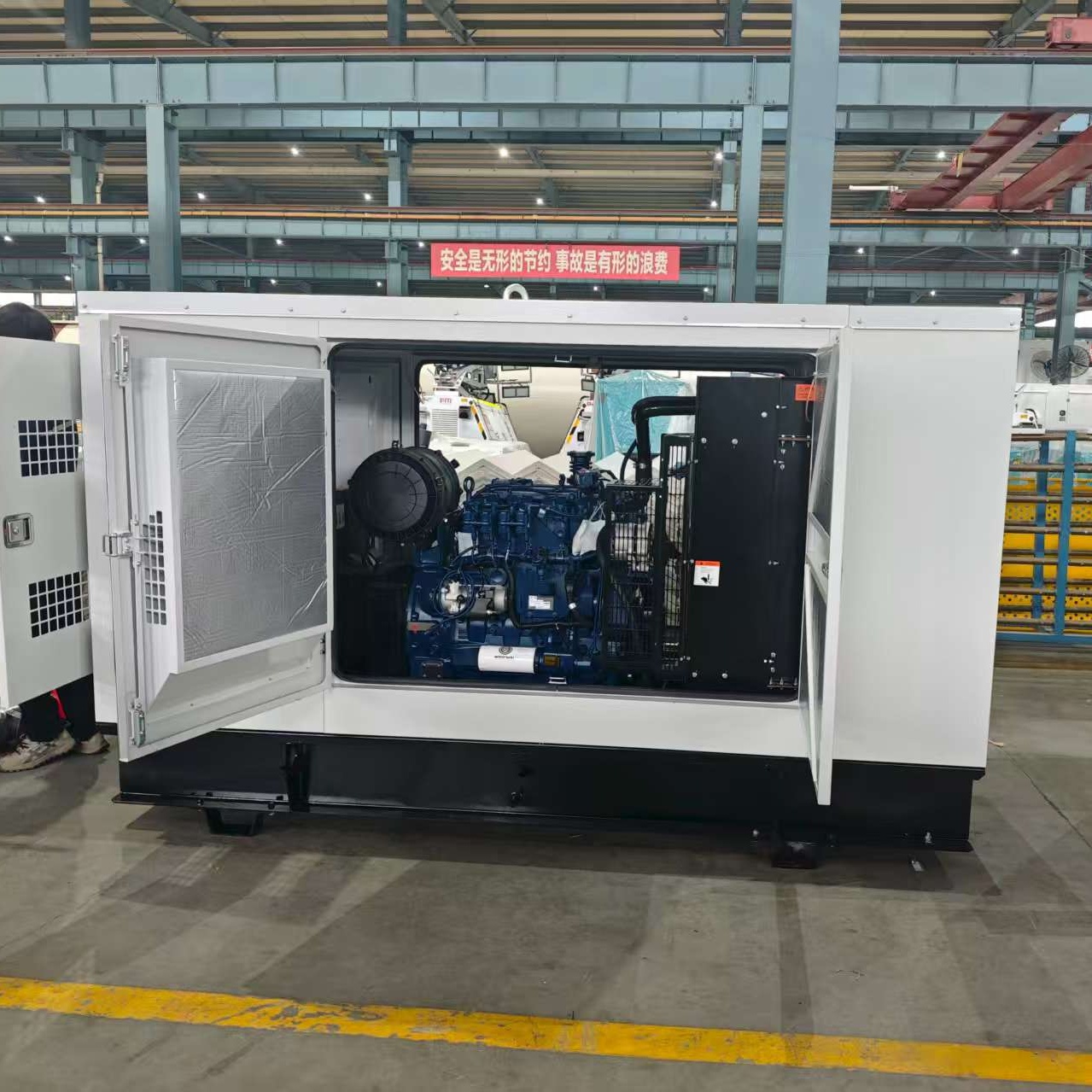
The Safety and Operational Risks of Neglected Electrical Connections in a High-Power Diesel Generator Set
Thermal Runaway and Arc Flash Hazards in High-Current Circuits
A loose or corroded connection in a high-power diesel generator set creates a high-resistance point. As current flows through it, Joule heating generates disproportionate heat—accelerating surface oxidation, which further increases resistance. This self-amplifying cycle can lead to thermal runaway: conductor metal softens, insulation melts, and ignition risk surges. In high-current circuits typical of large generators, this may culminate in an arc flash. Per IEEE 1584, such events can release over 9.6 cal/cm² in milliseconds—sufficient to cause second-degree burns at typical working distances. Industrial arc flash incidents number approximately 30,000 annually. The escalation is summarized below:
| Stage | Condition | Measurable Risk |
|---|---|---|
| 1 | Loose connection, 10% resistance increase | 30°C temperature rise at the terminal |
| 2 | Oxidation and pitting, cyclical heating | Intermittent voltage drop, insulation cracking |
| 3 | Thermal runaway, rapid conductor melting | Arc flash with instantaneous pressure wave and molten metal |
Cascading Effects: Voltage Instability, Load Shedding, and Catastrophic Failure
A compromised connection does more than overheat—it destabilizes the entire power system. A high-impedance joint on a main output terminal causes localized voltage drop. The Automatic Voltage Regulator (AVR) misreads this as system-wide under-voltage and over-excites the alternator, stressing excitation components and inducing voltage oscillations. These fluctuations can confuse the facility’s Power Management System (PMS), triggering unnecessary load shedding—even of critical systems. A single undocumented loose neutral link was identified as the root cause of a catastrophic failure resulting in over $740k in repairs and business interruption (Ponemon Institute, 2023). Ultimately, thermal degradation may cause the connection to separate abruptly. The resulting voltage transient can initiate a phase-to-phase fault, forcing immediate shutdown—and in worst cases, irreversible damage to alternator windings from short-circuit electromagnetic forces.
Critical Electrical Connection Points to Inspect on a High-Power Diesel Generator Set
Main Output Terminals, Busbar Joints, and Neutral Grounding Links
Main output terminals carry full-load current and are especially vulnerable to loosening from vibration and thermal cycling. Early warning signs include discoloration, pitting, or melted insulation. Torque validation against manufacturer specifications prevents micro-arcing—a primary driver of contact surface degradation. Busbar joints require equal scrutiny: even a 10% resistance increase can elevate local temperatures by more than 100°C under heavy load. Neutral grounding links, though often overlooked, are essential for fault-current path integrity. A loose neutral compromises ground-fault detection and permits undetected leakage currents. A simple, consistent checklist—fastener security, joint integrity, and infrared scanning—identifies roughly 80% of incipient failures before escalation.
Excitation System Cabling, AVR Interfaces, and Control Circuit Connections
Excitation cabling and AVR interfaces directly govern voltage stability. Poor contact at exciter field terminals forces the AVR to apply excessive excitation current, accelerating thermal stress and winding insulation degradation. Crimped lugs should be inspected for wire strand fatigue near termination points—a common failure mode after prolonged vibration exposure. Control circuit connections are equally vital: a single loose terminal in start/stop logic can delay or prevent emergency power transfer. Visual verification of termination tightness, combined with millivolt drop testing across key contactors, reveals high-resistance paths invisible to the naked eye. Many reliability-centered maintenance programs now mandate annual excitation-circuit verification to ensure dependable voltage build-up and eliminate erratic load response.
Standardized Inspection Protocol for a High-Power Diesel Generator Set
Three-Step Verification: Visual Assessment, Infrared Thermography, and Torque Validation (Per NFPA 70B & IEC 60204-1)
A robust inspection protocol follows the three-step verification framework outlined in NFPA 70B and IEC 60204-1: visual assessment, infrared thermography, and torque validation. Loose connections account for roughly 30% of industrial electrical failures, per the Electrical Safety Foundation International.
First, visual assessment involves methodical examination of all accessible terminals, busbar joints, and cable lugs for discoloration, corrosion, cracked insulation, or powdery arcing residue. Technicians must also confirm integrity of weatherproof seals and cable strain reliefs.
Second, infrared thermography is performed while the generator operates under ≥30% load to capture real-time thermal anomalies. A temperature differential of just 10 °C above ambient on a bolted connection signals a high-resistance joint requiring immediate correction.
Third, torque validation uses a calibrated torque wrench to verify that all bolted electrical connections meet OEM specifications. NFPA 70B recommends annual re-torquing; IEC 60204-1 provides detailed torque tables based on bolt grade and diameter. Documenting every finding—visual observations, thermal images, and torque values—creates an auditable record supporting regulatory compliance and long-term reliability. When fully integrated, this protocol reduces unscheduled generator downtime by over 40% (Ponemon Institute, 2023).
Preventive Maintenance Integration: Scheduling, Documentation, and Compliance for High-Power Diesel Generator Set Reliability
Integrating electrical connection inspections into the scheduled preventive maintenance program transforms a latent risk into a managed, predictable process. Inspection frequency should be dynamic—adjusted for operational duty cycle, ambient conditions (e.g., humidity, dust), and historical wear patterns. For units in high-vibration or corrosive environments, quarterly thermographic surveys and torque validation of main busbar joints and control terminations are advisable; stable indoor installations may extend intervals to semi-annually. This proactive cadence ensures early indicators—like subtle temperature rises—are captured before progressing to arc flash hazards or voltage instability.
Rigorous documentation anchors this approach—serving both as a forensic trail and a predictive tool. Each inspection must log infrared images with temperature deltas, torque values confirmed against OEM specs, and resistance measurements across neutral-grounding links. Digitizing these records in a Computerized Maintenance Management System (CMMS) enables trend analysis, automatically flagging connections exhibiting creeping resistance or recurring thermal anomalies. Compliance with NFPA 70B and IEC 60204-1 is not procedural box-checking: a documented history of systematic inspection demonstrates adherence and validates a shift from reactive to reliability-driven maintenance. When connection health data correlates with incident-free runtime, operators establish defensible evidence that disciplined preventive action preserves reliability—and routinely extends service life toward the full 20,000–30,000-hour design envelope.
FAQ
What is thermal runaway in electrical connections?
Thermal runaway occurs when a loose or corroded connection generates excessive heat due to high resistance. This heat softens metals, melts insulation, and increases ignition risk.
Why is infrared thermography required during inspections?
Infrared thermography detects real-time thermal anomalies in electrical connections, allowing technicians to identify potential failures before they escalate.
How often should preventive maintenance be scheduled for diesel generator sets?
Maintenance frequency depends on environmental conditions and operational cycles. High-vibration environments may require quarterly inspections, while stable installations can opt for semi-annual checks.
What are some critical electrical connection points in a diesel generator set?
Main output terminals, busbar joints, neutral grounding links, excitation cabling, and AVR interfaces are key areas prone to failure and should be regularly inspected.
How does poor electrical connection impact voltage stability?
A loose connection can cause voltage instability, which confuses systems like the Automatic Voltage Regulator (AVR) and Power Management System (PMS), risking load shedding and equipment damage.
Table of Contents
- The Safety and Operational Risks of Neglected Electrical Connections in a High-Power Diesel Generator Set
- Critical Electrical Connection Points to Inspect on a High-Power Diesel Generator Set
- Standardized Inspection Protocol for a High-Power Diesel Generator Set
- Preventive Maintenance Integration: Scheduling, Documentation, and Compliance for High-Power Diesel Generator Set Reliability
-
FAQ
- What is thermal runaway in electrical connections?
- Why is infrared thermography required during inspections?
- How often should preventive maintenance be scheduled for diesel generator sets?
- What are some critical electrical connection points in a diesel generator set?
- How does poor electrical connection impact voltage stability?