Out in the Russian highlands—whether you’re up in the Caucasus, the Siberian plateaus, or the wind-battered ridges of Kamchatka—these machines are the only thing standing between a remote mining crew and a frozen disaster. But the environment up there doesn’t care about your maintenance schedule.
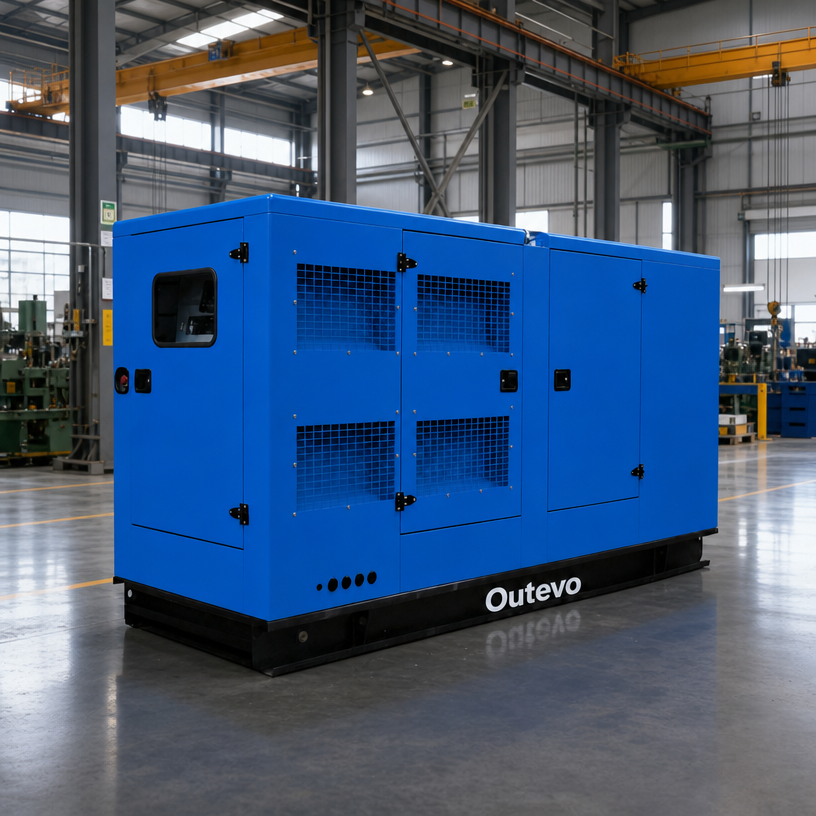
We use silent, canopy-enclosed generators out here because the noise would drive you crazy in a confined space, and the insulation helps keep the engine bay from instantly freezing. But that same insulation can be a trap if you don’t manage your fluids right. When you add high altitude to the mix, the air gets thin. Less oxygen means the engine runs richer, combustion is lazier, and starting becomes a massive chore. I’ve spent years wrenching on these beasts in the back of beyond, and I can tell you: ninety percent of your cold-start headaches come down to two things. Oil and coolant. Get those wrong, and you’re looking at a tow-out that costs more than the engine itself.
Let’s talk about viscosity first, because this is where a lot of guys get burned. At minus forty Celsius, standard 15W-40 mineral oil basically turns into tar. I’ve seen oil dipsticks come out looking like they were coated in honey. When you hit the starter, the oil pump has to work overtime to pull this sludge through the pickup tube. This causes cavitation—essentially, the pump is trying to suck a solid block of wax, creating air pockets instead of pressure.
The result? Your oil pressure switch trips before the engine even gets a chance to fire. Modern silent gensets have safety interlocks that won’t let the starter engage if oil pressure isn’t detected within a few seconds. So, you crank, nothing happens, and you’re left wondering if it’s a battery issue or a starter issue. Nine times out of ten, it’s just the oil being too thick to flow.
You have to run full synthetic. Period. In these regions, 0W-40 or 5W-40 synthetic is non-negotiable. The “0W” rating means it flows at much lower temperatures than a 10W or 15W. Yes, it costs more. But replacing a turbocharger or a set of rod bearings costs a lot more.
Pre-heating is your best friend, but you have to do it right. Block heaters and oil pan heaters are standard kit for a reason. If you’re in a pinch and don’t have electric power, some guys use external warm water baths on the oil pan. It’s ugly, it’s messy, but it works.
However, I’ve seen guys pour boiling water directly onto a frozen engine block. Don’t be that guy. The thermal shock will crack the cast iron or aluminum block instantly. I’ve seen it happen. You go from a broken generator to a paperweight in a split second. If you have to use hot water, warm up the oil pan and the filter housing, not the block itself. And always check your oil filter bypass valve during your winter service. Cold stress makes those springs brittle, and a stuck valve is a silent killer.
Coolant issues in the highlands are tricky because altitude changes the boiling point. Up at 3,000 meters, water boils at around 90°C. If your cooling system is weak, you aren’t just fighting freezing; you’re fighting boil-over the second the engine warms up.
The most common mistake I see? Guys using straight water or a weak 70/30 mix because they think “it’s already cold outside.” That’s a death sentence. Water expands when it freezes. If your coolant freezes inside the water jackets, it will crack the block or blow out the freeze plugs. I’ve pulled cylinder heads where the freeze plugs were pushed out two inches into the engine bay.
Thermostats are another failure point. Cold stress can cause them to stick closed. You start the engine, and because the thermostat is jammed shut, the hot coolant never circulates to the radiator. The temperature gauge spikes to the red zone in three minutes. Meanwhile, the block is boiling locally around the cylinders, warping the head.
Water pump seals also hate the cold. The rubber gets hard and brittle, and the moment the pump spins, you get a leak. In a silent canopy, you might not notice the drip until the coolant level drops and you’re sucking air.
For these altitudes, you want a 50/50 mix of ethylene glycol and distilled water at a minimum. If you’re expecting sustained temps below minus fifty, bump it to a 60/40 mix. But don’t go higher than 60% glycol. Pure antifreeze actually has worse heat transfer properties than a mix, and it gets thick and sludgy at extreme lows.
And for the love of mechanics, don’t confuse windshield washer fluid with engine antifreeze. I’ve had to drain and flush entire systems because a new guy thought the blue stuff in the jerry can was the same as the blue stuff in the radiator. Washer fluid has methanol; it won’t protect your engine block, and it’ll eat your rubber hoses.
So, what does this look like in real life when you turn the key?
The Slow Crank: The starter is fine, the batteries are charged, but the engine turns over like it’s underwater. That’s thick oil creating massive drag. Stop cranking. You’ll burn out the starter motor or drain the batteries before the engine catches.
The Safety Lockout: You turn the key, and the control panel flashes an “Oil Pressure Low” fault immediately. The starter doesn’t even engage. This is the interlock doing its job. Don’t bypass it. Warm the oil.
The White Smoke: You get the engine running, and it’s blowing thick, sweet-smelling white smoke. That’s coolant burning in the combustion chamber. You likely have a cracked head or a blown gasket. Shut it down.
The Instant Overheat: Engine starts, runs rough, and the temp gauge pegs out in sixty seconds. Thermostat is stuck, or you’ve got an air lock in the system. Kill it before you warp the head.
You can’t always wait for a specialist when you’re three days from the nearest town. Here’s how to troubleshoot and prep:
Pre-Start Checklist: 1. Check the Dipstick: Look for color and level. Wipe it, reinsert, check again. Look for milky residue. 2. Squeeze the Hoses: They should be firm but pliable. If they feel mushy or have soft spots, they’re compromised. 3. Inspect the Canopy: Make sure the intake and exhaust louvers aren’t blocked by snow or ice. Silent generators need airflow, even in winter. 4. Test the Block Heater: Put your hand on the block. It should be warm to the touch. If it’s ice cold, your heater is dead or unplugged.
Winterization Procedures: * Drain and Refill: Don’t trust old coolant. Flush the system before the first freeze and refill with fresh 50/50 ethylene glycol. * Oil Change: Do this before the deep cold hits. Old oil has contaminants that accelerate waxing. Fill with fresh 0W-40 synthetic. * Battery Blankets: Cold kills batteries. Keep them warm, or swap them out for high-CCA units rated for arctic use. * Fuel Conditioning: Add anti-gel to the diesel. Waxing fuel will starve the engine just as fast as thick oil.
When to Walk Away: If you’ve warmed the oil, verified the coolant level, and the engine still won’t start or makes a knocking sound, stop. Pushing it will only cause catastrophic damage. Call for support. There is no glory in destroying a fifty-thousand-dollar generator because you were too stubborn to admit the cold won this round.
Operating silent diesel generators in the Russian highlands isn’t about guessing; it’s about respecting the environment. The cold doesn’t negotiate.
Treat these machines right, and they’ll keep the lights on and the heat flowing when the mercury drops. Treat them poorly, and you’ll be spending your winter in a frozen tent waiting for a rescue team. Stay safe out there.

Shanghai Outevo Machinery Co., Ltd. provides custom power supply solutions for industrial applications. Our diesel generator sets deliver reliable, stable electricity with 24/7 production and nationwide support. Request a quote today.
Copyright © Shanghai Outevo Machinery Co., Ltd Privacy Policy