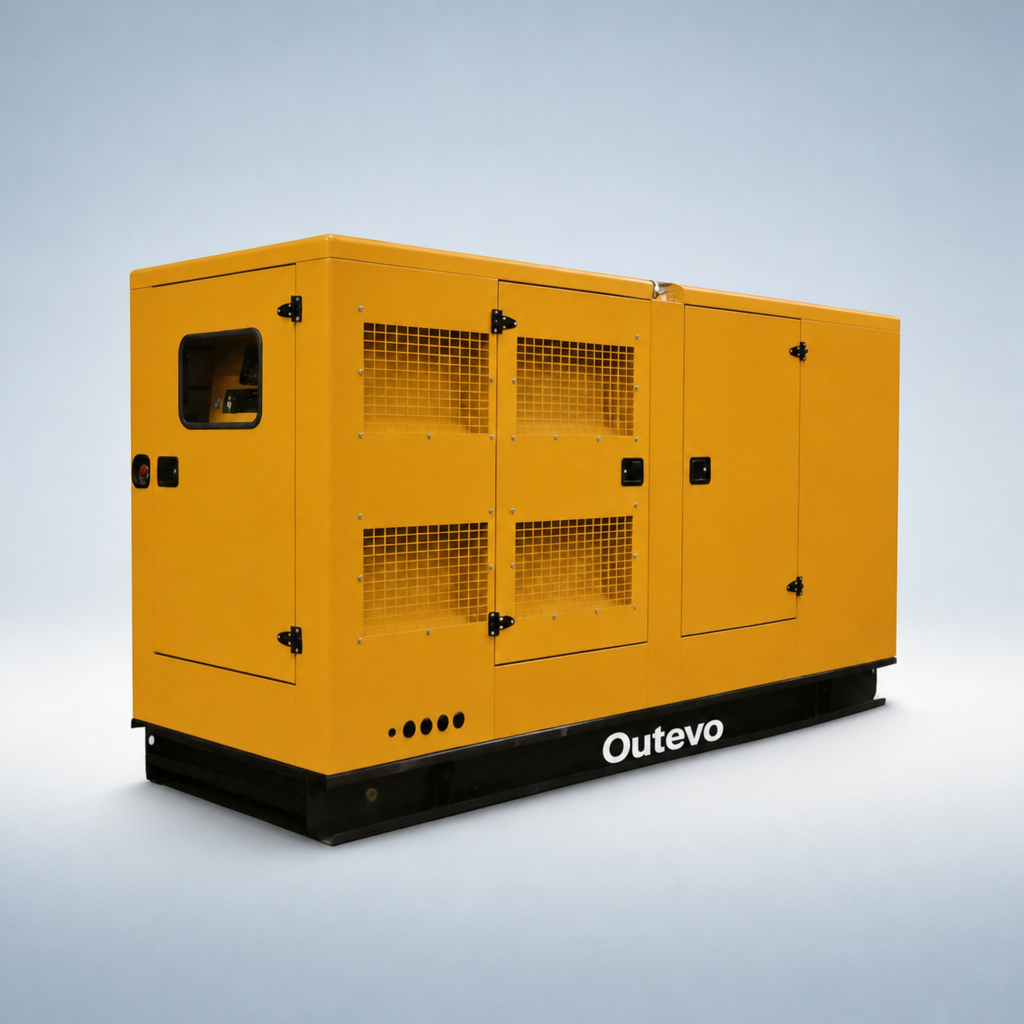
The problem isn’t any single factor. It’s the combination — salt in the air, moisture hanging heavy, temperatures that swing enough to cause condensation inside equipment, and rain that comes in heavy sheets for days at a time. Put a silent diesel generator out there and leave it idle for a few weeks, then try to start it when you actually need it. More often than not, you’re going to be standing there listening to the starter motor wheeze.
Let’s talk about the startup failures themselves, because understanding the failure mode is half the battle.
Batteries are the first thing to go in cold, damp conditions. A standard lead-acid battery loses about 1 percent of its capacity for every degree Celsius the temperature drops below 15 degrees Celsius. So when that January cold snap hits and temperatures dip to near freezing — which they do, regularly, for a few days at a time — your battery is suddenly operating at maybe 85 to 90 percent of its rated capacity. That might not sound like much until you need 200 amps in a split second to turn over a diesel engine.
But salt makes it worse. Salt-laden air creeps into battery terminal connections and corrodes them from the outside in. You might see a thin white or bluish crust on the terminals and think, “It’s just surface stuff, it’ll start fine.” The problem is that corrosion increases resistance at the connection point. Higher resistance means less current reaches the starter motor. The motor turns slower. The engine doesn’t catch. And you’re left wondering why a brand-new battery won’t turn over a three-year-old engine.
Diesel fuel doesn’t like cold, and it doesn’t like water. On the Russian coast, you get both. When temperatures drop, diesel fuel thickens. The wax crystals that form in colder fuel can clog filters within minutes. I’ve seen operators in Novorossiysk spend two hours chasing a startup problem only to find the fuel filter was essentially a block of gelatinous sludge.
Moisture is the other silent killer. The Black Sea coast gets a lot of rain — December alone can bring over 110 millimeters. That moisture finds its way into fuel tanks through condensation, especially in above-ground tanks where temperature swings between day and night cause the tank walls to sweat. Water settles at the bottom of the tank, and when the engine siphons from the bottom of that tank, it pulls in a shot of pure water straight into the fuel line. Water in the fuel system means no combustion. No combustion means no start.
This is the one that really gets people. Salt corrosion on electrical connections doesn’t announce itself with smoke or sparks. It just slowly raises resistance. A connector that measured 0.01 ohms last summer might read 0.15 ohms by November. That doesn’t seem like much on a multimeter, but in a low-voltage control circuit running at 12 volts, that extra resistance can drop enough voltage to make the starter relay click weakly or the control board throw a fault code for no discernible reason.
The AVR — the automatic voltage regulator — is particularly vulnerable. It’s usually mounted inside the generator canopy, and while the canopy is designed to keep rain out, salt-laden air gets in through every vent, every cable entry, every seam. Over time, the corrosion on the AVR’s sensing circuits causes voltage regulation to go haywire. You might get output voltage that jumps between 200V and 250V depending on the load, or the generator might refuse to build voltage at all on startup because the residual magnetism has been compromised by moisture ingress.
Okay, so what do you do about it? Here’s the practical stuff that actually makes a difference, based on what I’ve seen work on sites along the Russian coast.
Keep the terminals clean and coated with dielectric grease or petroleum jelly. Not the fancy stuff — just plain petroleum jelly from the hardware store. It repels moisture and salt. Check the battery voltage monthly, not just when something goes wrong. If you’re in a particularly harsh spot, consider a battery blanket heater — those little insulated heating pads that wrap around the battery and keep it above 10 degrees Celsius. They plug into shore power and cost maybe 30 to 50 dollars. Worth every penny if you’ve ever watched a dead battery on a cold morning.
Install a water-separating fuel filter and check it every two weeks during the wet season. Keep the fuel tank as full as possible during storage — less air space means less condensation. If you’re storing fuel in above-ground tanks, consider adding a fuel stabilizer and running the engine dry before long-term storage. And use diesel with a lower cloud point for winter — on the Black Sea coast, -10 or -15 grade diesel should handle most winters. Just check the local weather forecast and pick the grade that’s five degrees below the expected low.
This is the big one. Go through every electrical connection in the generator — battery cables, starter connections, alternator connections, control panel wiring, ground straps — and clean them down to bare metal. Use a wire brush or sandpaper, then apply a corrosion inhibitor like dielectric grease or electrical contact cleaner. Wrap the connections in electrical tape or heat shrink tubing after treating them. Do this every six months, not once a year.
Pay special attention to the AVR and exciter connections. These are the components that most often fail silently in coastal environments. If the AVR is mounted externally or in a ventilated compartment, consider adding a small desiccant packet inside the compartment to absorb moisture.
Generators on the Russian Black Sea coast don’t fail because of one big catastrophic event. They fail because of a thousand tiny cuts — a corroded terminal here, a wet fuel filter there, a slightly thick oil connection somewhere else. Each one alone is manageable. Together, they create a situation where the generator won’t start when you need it most.
The fix isn’t a magic product or a fancy upgrade. It’s discipline. Clean connections, dry fuel, proper oil, good coolant, and a dry enclosure. Check everything on a schedule, not when something breaks. Do that, and your silent generator will start every time, even when the Black Sea wind is howling and the salt spray is coming in thick.

Shanghai Outevo Machinery Co., Ltd. provides custom power supply solutions for industrial applications. Our diesel generator sets deliver reliable, stable electricity with 24/7 production and nationwide support. Request a quote today.
Copyright © Shanghai Outevo Machinery Co., Ltd Privacy Policy