Selection and Maintenance Guide for Open-Frame Generators in the Middle East
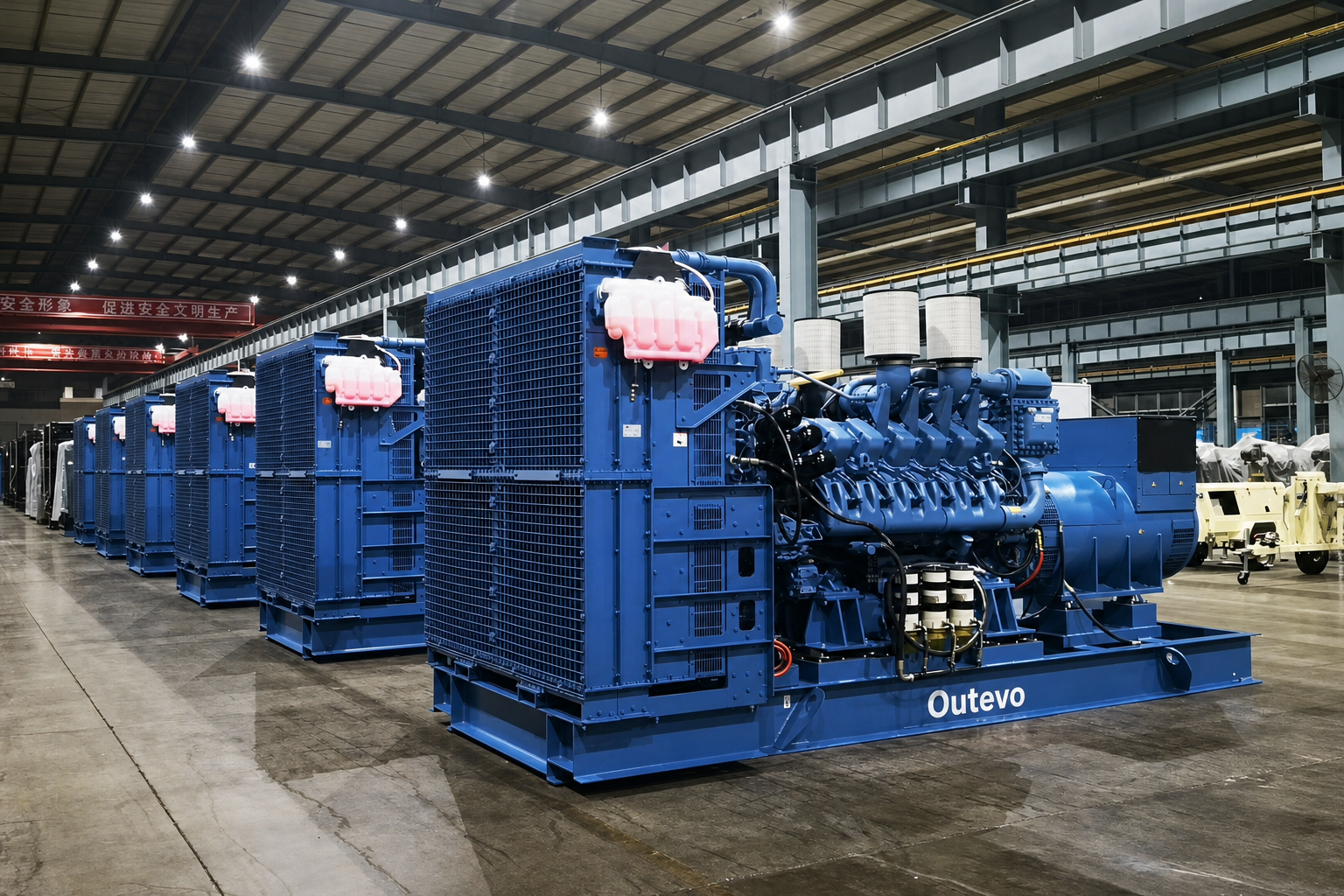
Practical Selection Advice
Don’t buy on kW alone. Buy on application and environment. A 200kW unit for a dusty construction site needs different specs than a 200kW unit for a clean hospital basement. Oversize the cooling system and air filtration; you can never have too much margin in this climate. Undersize the noise expectations; open frames are loud, and retrofitting acoustic treatment later costs more than specifying it upfront.
Service access matters. Before you sign the purchase order, have your maintenance team walk around the unit. Can they reach the oil filter? Is the air filter housing accessible without removing panels? Will a mechanic need to disassemble the exhaust to change the starter? If the answer is no, walk away.
The desert doesn’t forgive cutting corners. Spec conservatively, maintain aggressively, and your open-frame generator will run for decades. Cut corners, and you’ll be replacing it in five years while paying double in downtime costs.
Maintenance and Servicing in Desert Conditions
The Middle East eats generators for breakfast if you don’t respect the environment. Dust and heat are the twin enemies.
Daily and Weekly Checks
Walk around the unit daily. Check for oil leaks, coolant levels, and air filter restriction indicators. In dusty areas, check the air filter every shift during sandstorms. Don’t wait for the gauge to hit red. Inspect drive belts for glazing; heat cracks rubber fast. Weekly, run the unit under load for at least 30 minutes if it hasn’t run. Wet stacking (unburned fuel in the exhaust) is a real risk in standby units that never see full load.
Oil and Filter Intervals
Manufacturer intervals are based on “normal” conditions. The Middle East isn’t normal. Cut oil change intervals by 25-30% for units in high-dust, high-heat environments. Use 15W-40 CI-4 or CJ-4 rated oil minimum. Synthetic 5W-40 offers better high-temp protection but verify warranty compatibility. Always use OEM or premium filters; cheap filters collapse under thermal cycling.
Air Filter Maintenance
This is your most critical maintenance task. Fine silica dust bypasses cheap filters and scores cylinder liners. Check pre-cleaners daily; empty the dust bowl. Replace primary filters when the restriction gauge hits 25” H2O, not when it hits red. Never clean and reuse paper air filters. Compressed air damages the media. Keep spare filters on-site, stored in sealed plastic to prevent moisture absorption.
Coolant System Care
Use only ethylene glycol-based coolants with proper corrosion inhibitors. Propylene glycol has lower heat transfer capacity and isn’t ideal for high-ambient applications. Test coolant concentration quarterly; evaporation concentrates the glycol, reducing heat transfer. Flush and replace coolant every 2 years or 3000 hours, whichever comes first. Inspect radiator fins for sand buildup; blow out with low-pressure air from the engine side outward.
Battery Maintenance
Heat kills batteries. A battery that lasts 4 years in Europe might die in 18 months in Dubai. Use maintenance-free AGM or gel batteries rated for high temperatures. Check specific gravity monthly on flooded types. Keep battery chargers float-voltage compensated for temperature; overcharging in heat boils off electrolyte. Inspect terminals for corrosion; apply dielectric grease.
Load Bank Testing
Run annual load bank tests to 100% of rated capacity for 2-4 hours. This burns off carbon, validates cooling system performance, and proves the alternator can handle full load. Test at actual operating temperature, not in the cool of the morning. Record coolant temp, oil pressure, and exhaust gas temps at each load step. Any deviation from baseline needs investigation.
Seasonal Considerations
Summer prep happens in March. Replace air filters, flush coolant, test batteries, and verify ventilation fan operation. Winter (November-February) is maintenance season. Overhaul engines, replace hoses, and repaint corroded mounts. Sandstorm season (spring/autumn) requires daily air filter checks and sealing any gaps in generator room louvers.
