A genset that runs fine at sea level does not behave the same way at 3,000 metres. There is less air, less oxygen, and what little cooling air there is works less effectively. Most engines start losing power above 1,000 m, and above 2,000 m the effect is hard to ignore. The standard rule of thumb is roughly 8–12% power loss per 1,000 m for a naturally aspirated engine, and about 4–7% for a turbocharged one. So a 500 kW unit rated at sea level may only give you 350–400 kW at 3,000 m. If you pick the machine by its nameplate alone, you will spend your time overheating, smoking, and wondering what went wrong.
Silent enclosures make this worse, not better. The soundproof canopy is designed to trap noise, which also means it traps heat. At altitude the fan is moving thinner air, so the radiator has to work harder just to keep the engine in its comfort zone. The fix is rarely “more oil” or “more fuel”. It is a combination of the right viscosity, a derated load calculation, and a maintenance rhythm that actually fits the site.
The tricky part about high ground is the temperature swing. A site can sit at –10°C before dawn and climb past 25°C by mid-afternoon. Oil has to pump freely on a cold start and still hold an oil film at full load. That is exactly what a multi-grade oil is for.
As a starting point, most manufacturers will tell you SAE 15W-40 is the default for normal climates and will cover you above –15°C. Move higher and colder, and 10W-30 starts to make more sense. In consistently harsh cold, 5W-40 or 0W-40 synthetic oils are the safer bet, but they are not a free upgrade: a very light oil used in heavy summer load can sit at low oil pressure and wear the bearings. Switch back to the thicker grade when the weather warms up or the set is moved to a lower site.
Use a proper API grade as well. CF-4 or higher is the common minimum; CH-4, CI-4 or CJ-4 are worth it on a turbocharged engine working hard at altitude. Low-ash oils help keep injectors and the combustion chamber cleaner, which matters because combustion is never quite complete and carbon builds up faster.
One more thing worth checking: the oil filter must match the oil grade and the extended interval. If you upgrade the oil but keep a filter that is only rated for the short cycle, you have just moved the weak link from the sump to the cartridge.
These are guideline figures. Always confirm against the engine manual and the oil supplier’s data sheet, then shorten the interval if your site is dusty, the unit runs long hours, or the oil analysis comes back dirty.
|
Suggested viscosity |
Oil change interval |
Filter change |
|
SAE 15W-40, CF-4 or higher |
As per manual, typically 250 h |
With every oil change |
|
SAE 15W-40 or 10W-30 |
200–250 h |
Every oil change |
|
SAE 10W-30 or 5W-40 synthetic |
150–200 h |
Every oil change, check pressure |
|
0W-40 synthetic, low pour point |
Follow oil maker + 20% margin |
Every change, monitor closely |
Two habits pay for themselves quickly. First, check the dipstick on level ground with the engine stopped, and top up in small amounts rather than guessing. Second, keep an oil analysis programme running. At altitude, fuel dilution and soot loading show up earlier than you expect, and a sample tells you more than a sight glass ever will.
A turbocharged and intercooled engine is the right tool for the job. A naturally aspirated unit will lose power faster and is not something you want to rely on long-term above 2,000 m. But even the best turbo does not cancel out altitude; it just reduces the loss. At 3,000 m you should expect something in the region of 80–85% of rated output, sometimes less.
So size the set to the corrected power, not the nameplate. If you need 400 kW at 3,000 m, a 500 kW sea-level machine is cutting it uncomfortably close, and a 550–600 kW unit is probably the honest answer. Add a further margin for temperature: the correction for heat and the correction for altitude stack on top of each other. And whatever you do, do not ask the mechanic to “turn up the fuel” to make the power come back. More fuel with the same amount of oxygen means black smoke, high exhaust temperature, melted pistons, and a very expensive invoice.
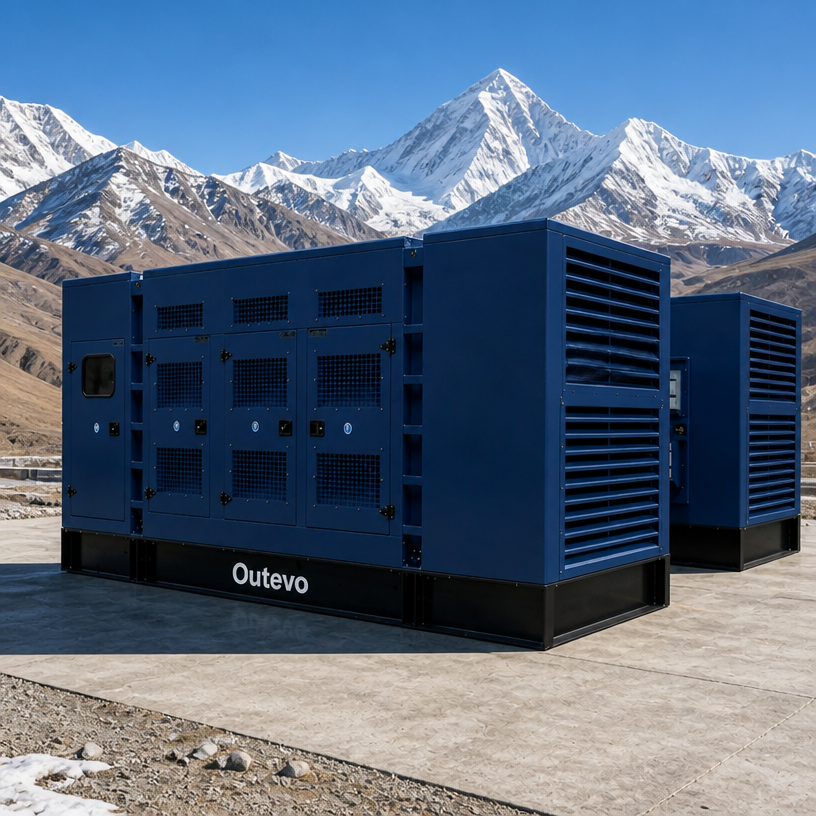
Everything wears faster up there. The air is thin, the dust is fine, and the temperature cycling is brutal on rubber seals and electrical insulation. Plan on shortening your maintenance cycles by roughly 25–40%, and you will spend far less time fixing things.
Air filter first. In a dusty plateau environment, check it weekly, not monthly. A blocked filter starves the engine for air, raises exhaust temperature and can overspeed the turbocharger on the way out. A two-stage heavy-duty filter with a differential-pressure alarm is a worthwhile investment. Cooling system second: keep the radiator clean, use a proper long-life antifreeze rather than plain water, and remember that the boiling point of coolant falls with altitude, so a pressurised cap matters more than it does at sea level.
Fuel system: drain water from the separator regularly, because big day-night temperature swings cause condensation in the tank. Use winter-grade diesel matched to the lowest expected temperature so the wax stays in solution. Check the injectors and valve clearances a little more often than the book says; incomplete combustion leaves deposits, and deposits change the running behaviour of the whole engine.
The electrical side is easy to overlook. Air at low pressure does not insulate or extinguish arcs as well, so breakers and contactors may need to be derated or specified as plateau-rated. Sunlight is fierce and cables age quickly, so use UV-resistant cable and keep terminations protected from water and dust.
A preheating system stops most altitude-start problems before they start. A jacket water heater, an oil heater, glow plugs or a flame preheater will get the engine warm before you ever ask the starter motor to do its job. Above 3,000 m, preheating during the day is not a luxury either; it is just good practice.
Batteries lose capacity in the cold, so fit low-temperature batteries in a proper insulated box, keep the terminals clean and tight, and do not crank for more than a few seconds at a time. Once it fires, let it idle and warm up rather than slamming on full load. Wait until the coolant is above roughly 40°C before stepping the load on, and take it up gradually. The same logic applies at shutdown: come off load, let it run light for a few minutes, then stop.
Finally, do not seal the generator room tight. Thin air means exhaust gas spreads faster and lingers longer. Keep intake and exhaust separate, fit a carbon monoxide alarm, and do not spend any more time inside the enclosure than you have to.
Run through that list and a silent container genset will keep doing its job at altitude instead of becoming a very expensive space heater. When in doubt, send the site altitude and the load profile to the manufacturer and let them re-map the fuel system for the height. It costs far less than a rebuild.

Shanghai Outevo Machinery Co., Ltd. provides custom power supply solutions for industrial applications. Our diesel generator sets deliver reliable, stable electricity with 24/7 production and nationwide support. Request a quote today.
Copyright © Shanghai Outevo Machinery Co., Ltd Privacy Policy