
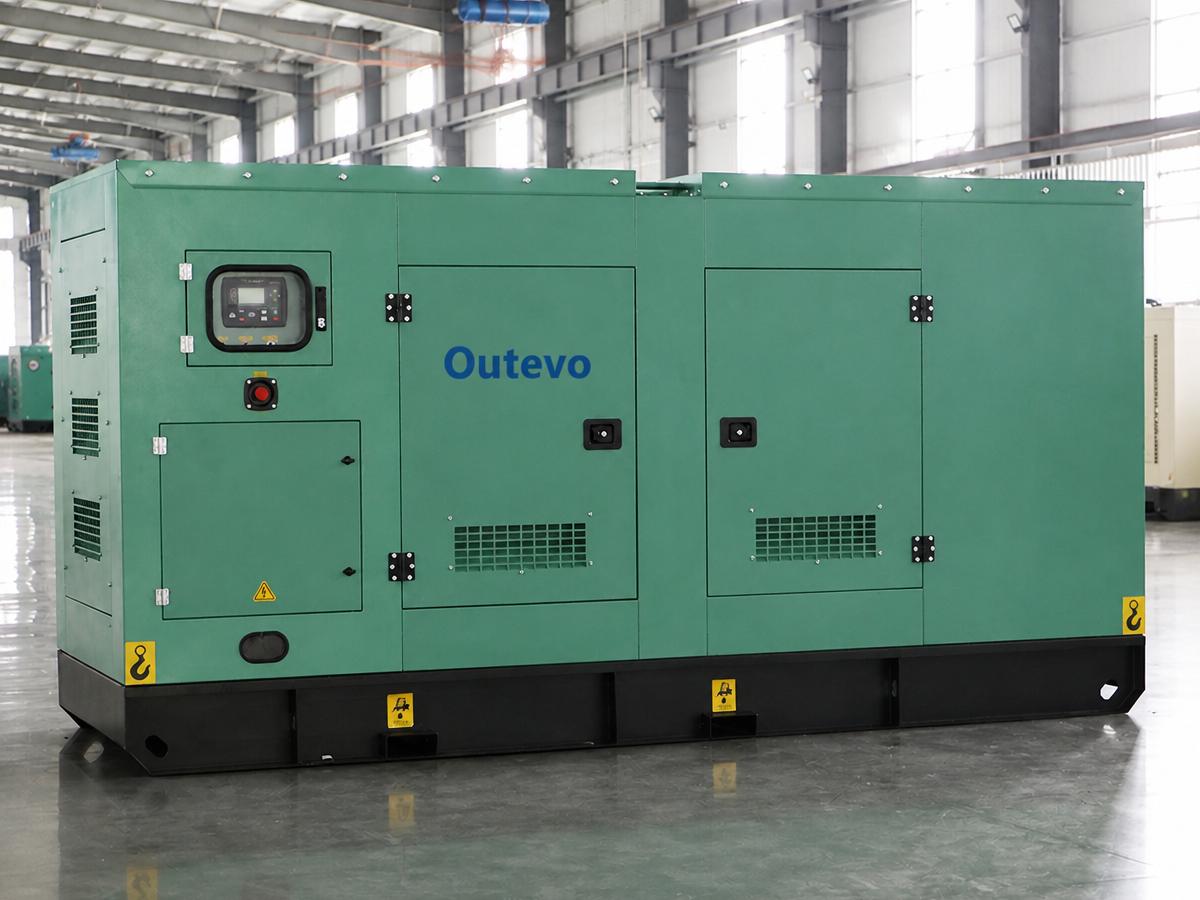
Container power station site preparation decides more of the plant's reliability than most of the equipment specification. A containerized generator set arrives as a tested unit, but it only performs as designed when the ground under it is flat and strong enough, the cables leave it without strain, the fuel reaches it clean, and the air path in and out of the enclosure is the one the cooling system was sized for.
This guide covers the civil, electrical and mechanical work that has to be finished before the container is set down, and the commissioning sequence that proves the installation is complete.
Why the Container Is Only Half the Project
A container power station packs the engine, alternator, controls, cooling system and often the fuel tank into a transportable enclosure. That integration moves engineering risk into the factory, which is the point of the format, but it also means the interfaces left on site are the ones nobody owns: the foundation, the cable entry, the earthing, the fuel connection and the exhaust termination. Most early-life problems in container installations trace back to one of these five.
Site Layout and Access
The layout has to be fixed before the foundation is poured, because moving a container later is expensive and often impossible without a crane.
- Delivery route. Confirm the road, gate width, turning radius and ground bearing capacity along the whole route, including any temporary track. A 40-foot container needs space that a site plan drawn at concept stage often does not show.
- Set-down position. Leave working space for radiator air discharge, door opening, filter and battery access, and cable termination. Service access that exists only before the neighbouring container arrives is not service access.
- Separation between units. Where several containers form a plant, hot air from one must not enter the intake of another. Recirculation is the most common cause of overheating in multi-container installations.
- Exhaust direction. Point exhaust away from doors, air intakes, windows and neighbouring equipment, and respect the clearance the manufacturer specifies.
- Flood and drainage. Raise the plinth above the local flood level and drain the area so that water cannot stand against the container base.
Foundation, Leveling and Load Distribution
A container is stiff, but it is not designed to bridge a soft spot. The foundation should carry the operating weight plus fuel, and it should distribute that load evenly across the container's base rails.
- Type. A reinforced concrete slab or a properly designed skid foundation is normal. Ground screws or piles are used where soil conditions require them.
- Flatness. The base rails must sit on a flat, level surface. Twist in the container stresses the enclosure, misaligns doors and can transmit vibration into the frame.
- Anchoring. Anchor points should resist wind and seismic loads as required by local code, and should not puncture the enclosure in a way that compromises weather protection.
- Vibration isolation. Where the set is not internally isolated, resilient pads between container and foundation reduce structure-borne noise.
- Earthing provision. Cast or drill for the earthing connection before the container arrives, rather than improvising afterwards.
Cable Entry, Glanding and Segregation
Cable entry is where a well-built container installation most often looks unfinished. Cables should enter through the designated gland plate, with correct-size glands, strain relief and a loop of slack outside the enclosure so that settlement or thermal movement does not pull on the terminals.
- Bend radius. Respect the minimum bend radius of the largest conductor. Tight bends at the entry point damage insulation and create hot spots.
- Segregation. Keep power and control cables separated inside and outside the container, and use separate entries where the design provides them.
- Sealing. Seal every entry against dust, water and rodents. An open gland plate defeats the enclosure rating of the whole container.
- Support. Support cable trays and ducts independently of the container so that vibration is not transferred into the terminations.
- Neutral and earth. Confirm the neutral arrangement and the earth bar connection against the single-line diagram, particularly where the plant runs in parallel with a utility or with other generators.
Fuel System, Day Tank and Containment
If the container includes a base tank, the site work is limited to fill points, vents, bunding and a safe delivery route. If fuel comes from an external tank, the transfer system becomes part of the installation.
- Fill point. Position it for safe tanker access, with spill containment and a clear route for hoses.
- Bund. Provide secondary containment sized for the tank and for a realistic spill during delivery.
- Transfer pump and piping. Size the transfer for the plant's consumption with margin, fit isolation valves, and route piping so that it cannot be damaged by vehicles.
- Water and sludge. Provide low-point drains and a water trap, and plan how the tank will be checked and cleaned.
- Return and overflow. Confirm that return lines and vents are correctly sized and that overflow cannot discharge where it creates a fire risk.
Cooling Air, Exhaust and Noise
The container's cooling system is designed against a defined airflow. Anything that restricts it, or returns hot air to the intake, reduces available output exactly when the ambient temperature is highest.
Check that inlet and outlet openings are clear of walls, fences, stored material and other containers; that the discharge does not short-circuit back into the intake; and that any acoustic treatment added on site does not reduce free area below the design figure. Exhaust silencers, flexible sections and penetration seals should be installed so that the exhaust does not load the container structure.
Pre-Commissioning Checks
- Insulation resistance and continuity on all power and control cables.
- Phase sequence verified at the generator terminals and at the point of connection.
- Earthing resistance measured and recorded against the design value.
- Fuel system pressure tested, filters primed, water and sediment removed.
- Coolant, oil and battery electrolyte levels checked; battery charged and load tested.
- All shipping restraints, transport blanks and protective covers removed.
- Protection settings verified against the approved settings sheet.
- Fire detection and suppression, if fitted, confirmed operational.
Commissioning Sequence
Commissioning should follow a written sequence: no-load start and run, checks of voltage, frequency and control behaviour, then progressive load steps with readings recorded at each step, then a full-load run to stable temperature, and finally the transfer or paralleling functions if the plant includes them. Each stage should be signed off before the next begins, so that a fault is attributed to the right stage rather than discovered at the end.
Handover documentation should include as-built drawings, protection settings, test sheets, fuel and cooling design data, and an operator briefing in the language the site team actually uses.
FAQ: Container Power Station Installation
Does a container generator need a concrete foundation?
It needs a foundation that is flat, level and able to carry the operating weight evenly. A reinforced slab is the usual solution; a designed skid or pile arrangement is used where ground conditions require it.
Can containers be installed side by side?
Yes, provided the spacing prevents hot air from one unit entering the intake of another and leaves room for service access. Layout should be agreed with the supplier before the foundation is built.
How long before installation should the site work be finished?
The foundation, cable entry and earthing should be complete and inspected before the container arrives, so that the unit can be set, connected and commissioned in one sequence rather than waiting on civil work.
What is the most common installation fault?
Restricted or recirculating cooling air, followed by poorly sealed cable entries. Both are visible at commissioning and both reduce reliability for the life of the plant.
Site preparation is unglamorous work, but it is the difference between a container power station that runs at its rated output for years and one that is derated, noisy and unreliable from the first week.
Table of Contents
- Why the Container Is Only Half the Project
- Site Layout and Access
- Foundation, Leveling and Load Distribution
- Cable Entry, Glanding and Segregation
- Fuel System, Day Tank and Containment
- Cooling Air, Exhaust and Noise
- Pre-Commissioning Checks
- Commissioning Sequence
- FAQ: Container Power Station Installation
