
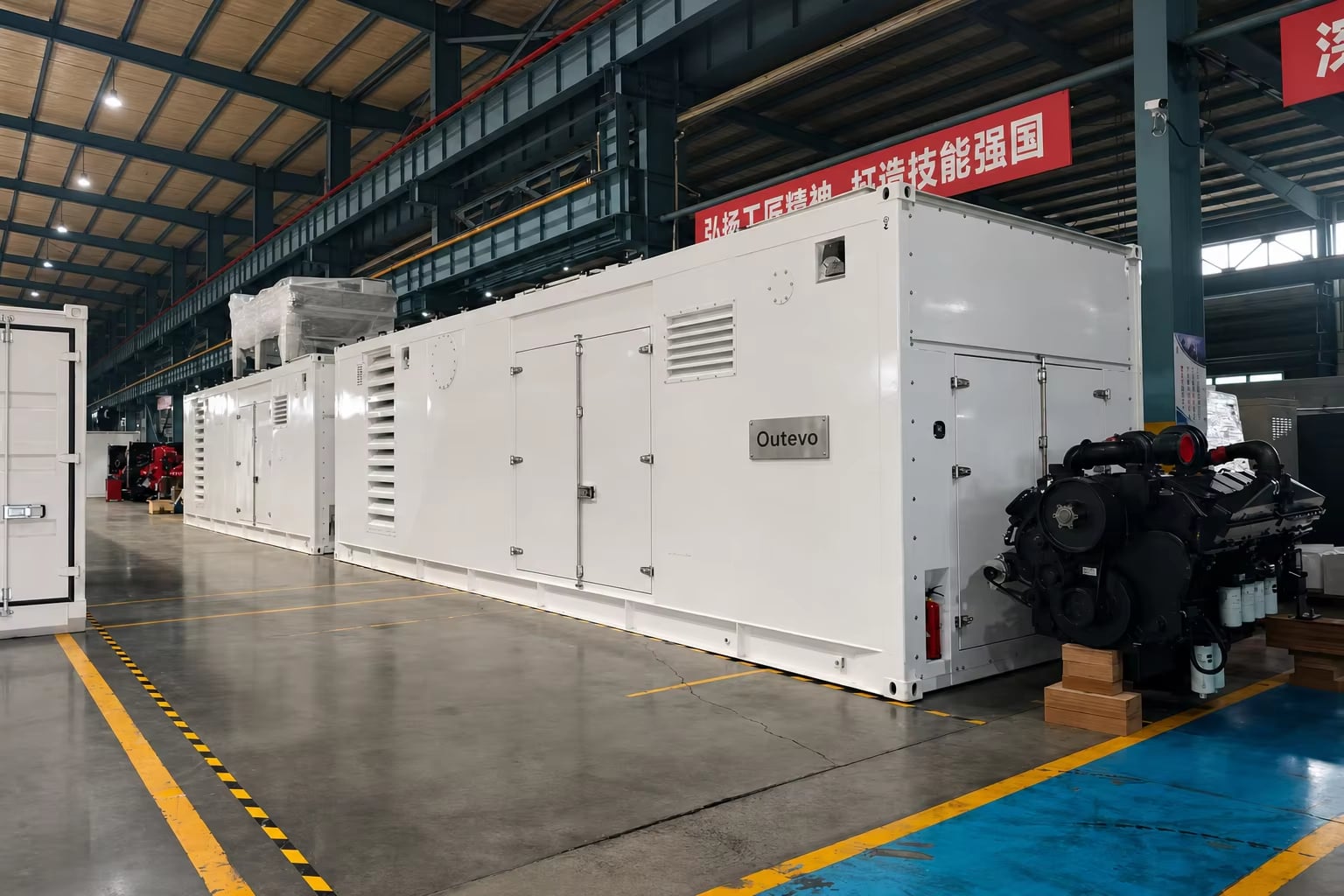
Data center backup generator testing is not the same as maintaining a construction site genset. In a data center the generator is part of a chain that includes the utility feed, the automatic transfer switch, the UPS and the critical distribution. A set that starts and runs is not enough; the chain has to transfer, carry and recover within a defined time, and there has to be documentary evidence that it did so last month, not last year.
This guide sets out a test regime that covers the three elements most often under-tested: the automatic transfer switch, the generator under real load, and the fuel system that determines how long the plant can actually run.
Why Testing Is Different in a Data Center
Commercial buildings tolerate a short outage. Data centers do not. The IT load rides through a transfer on battery, which means the generator has a defined window to start, stabilize and accept load before the UPS batteries are exhausted. Every test should therefore measure time as carefully as it measures electrical parameters.
- Start-to-ready time. From the transfer signal to the generator reaching rated voltage and frequency, compared with the UPS ride-through time.
- Transfer time. The break in supply at the critical bus, including any deliberate overlap or closed-transition sequence.
- Load acceptance. The ability to take a step load without exceeding the voltage and frequency limits agreed for the facility.
- Return and retransfer. A stable cooldown, a clean retransfer and a return to normal without a second disturbance.
The Test Calendar: From Weekly No-Load Starts to Annual Full-Load Runs
A workable programme layers four frequencies. The exact intervals should follow the manufacturer's instructions, the applicable code and the facility's own risk assessment, but the structure is consistent.
- Weekly. Automatic start and run for a short period without load, with the control panel, battery voltage, coolant and oil levels checked. This proves the starting system is alive, not that the plant can carry the building.
- Monthly. Transfer test at a maintained load, ideally with the critical load transferred to the generator for a defined period. This is where wiring, control logic and the ATS are actually exercised.
- Quarterly or semi-annual. Load bank test at a meaningful percentage of the rated output, long enough to reach stable operating temperature and to expose cooling or fuel problems that only appear under heat.
- Annual. Full functional test including protection settings, fuel autonomy verification, and a review of all trend data against the previous year.
ATS Transfer Testing: The Step Most Often Skipped
Many sites test the generator faithfully every month and never test the transfer switch. The result is a generator that runs perfectly while the building stays dark, because the transfer did not occur or occurred with an open transition long enough to drop the load.
A complete ATS test covers both directions and both modes:
- Simulate a utility failure at the sensing point, not by pressing a test button on the generator controller alone.
- Record the time from utility loss to engine start, and from engine ready to transfer.
- Confirm the load is carried on the generator, then simulate utility return and record the retransfer delay and the cooldown period.
- Test the manual and bypass positions if the switch provides them, and confirm the mechanical and electrical interlocks work.
- Verify that the neutral arrangement is correct for the transfer equipment in use, particularly on systems with multiple transfer switches and a common generator.
Where the facility uses closed-transition switching, the test must confirm synchronization settings and the breaker timing, because a mis-timed closed transition is a fault rather than a convenience.
Load Bank Testing: What It Proves and What It Hides
The building load during a monthly test is rarely the load the generator will see on the worst day. A data center running at partial IT load gives the generator an easy life; the set may never reach the temperature and load band where problems appear. A resistive load bank fills that gap by applying a known, repeatable load.
Load bank tests should be long enough for the engine and alternator to reach stable temperatures, and they should include a step load rather than a slow ramp. A generator that accepts a gradual load and trips on a step is not ready for a transfer.
There are limits. A resistive bank does not reproduce the power factor of real IT equipment, which is dominated by switch-mode supplies and UPS rectifiers. Where the facility has a significant non-linear load, a reactive-capable bank or a test with the real UPS load gives a more honest picture of alternator behaviour, voltage distortion and heating.
Fuel Autonomy: The Number Nobody Recalculates
Fuel autonomy is usually quoted at commissioning and rarely revisited. In practice the number changes: the load grows, the tank is derated for unusable volume, the fuel supplier delivers less than ordered, and the generator's consumption at partial load is higher per kWh than at the design point.
A realistic autonomy check has four inputs:
- Usable tank volume, not nominal capacity. The draw-off point sits above the tank floor to avoid water and sludge, and the fill limit leaves ullage.
- Actual load profile during a utility outage, including cooling and ancillary loads, not just the IT figure.
- Consumption at that load, taken from test data rather than from a brochure curve.
- Refuelling plan, including supplier response time, site access and whether the contract guarantees priority delivery during a regional event.
The output should be a documented number of hours at a stated load, reviewed whenever the IT load or the fuel contract changes.
Cooling, Exhaust and Room Conditions During Testing
Tests are also the only chance to observe the plant under thermal stress. During a load bank run, check that radiator air is not recirculating, that room temperature stabilizes rather than climbing steadily, that exhaust components and lagging are sound, and that the combustion air path is unobstructed. A generator that passes an electrical test while the room temperature climbs ten degrees per hour has not passed.
Noise and vibration are worth recording as a baseline. A change in either is often the first sign of a mounting, coupling or bearing problem, long before it appears as a fault code.
Records, Trends and Handover Documentation
The value of testing lies in the record. Each test should capture start time, ready time, transfer time, load in kW and kVA, power factor, voltage and frequency at each phase, coolant temperature, oil pressure, fuel level before and after, and any alarms. Trended over a year, these numbers show battery degradation, cooling system fouling and fuel consumption drift before they become failures.
Keep the records with the single-line diagram, the protection settings and the fuel autonomy calculation so that the next engineer inherits evidence rather than assumptions.
What Fails in Practice
- Batteries. A set that cranks slowly on a cold morning fails on the day it is needed. Battery load testing is not optional.
- Fuel. Water, microbial growth and aged diesel cause filter blocking and injector damage, often without warning.
- Coolant and hoses. Small leaks and perished hoses are invisible in a short no-load run.
- Control wiring. Loose terminations in the ATS and the generator interface cause intermittent transfer failures that only appear under test.
- Block heaters and jacket water heaters. A failed heater turns a fast start into a long crank at the worst moment.
FAQ: Data Center Backup Generator Testing
How often should a data center generator be load tested?
Most facilities load test quarterly or semi-annually at a meaningful percentage of rated output, in addition to monthly transfer tests and weekly no-load starts. The right interval depends on the criticality of the site and the manufacturer's guidance.
Can the building load replace a load bank test?
Only if the building load is high enough and stable enough to bring the set to temperature and to demonstrate step-load acceptance. In most data centers the real load during a test is well below the design load, so a load bank is still needed.
How long should the generator run on load during a test?
Long enough to reach stable coolant and oil temperature and to reveal any thermal or fuel problem. Short runs give a false sense of security because most faults appear after the plant is hot.
What is the most common cause of failed transfers?
Control and wiring issues around the transfer switch and the generator interface, followed by battery and starting system problems. Both are found by testing the whole chain, not just the engine.
Test programmes that measure time, load and fuel honestly turn a standby generator from an installed asset into a demonstrated capability, which is what a data center actually needs to claim.
Table of Contents
- Why Testing Is Different in a Data Center
- The Test Calendar: From Weekly No-Load Starts to Annual Full-Load Runs
- ATS Transfer Testing: The Step Most Often Skipped
- Load Bank Testing: What It Proves and What It Hides
- Fuel Autonomy: The Number Nobody Recalculates
- Cooling, Exhaust and Room Conditions During Testing
- Records, Trends and Handover Documentation
- What Fails in Practice
- FAQ: Data Center Backup Generator Testing
