 EN
EN

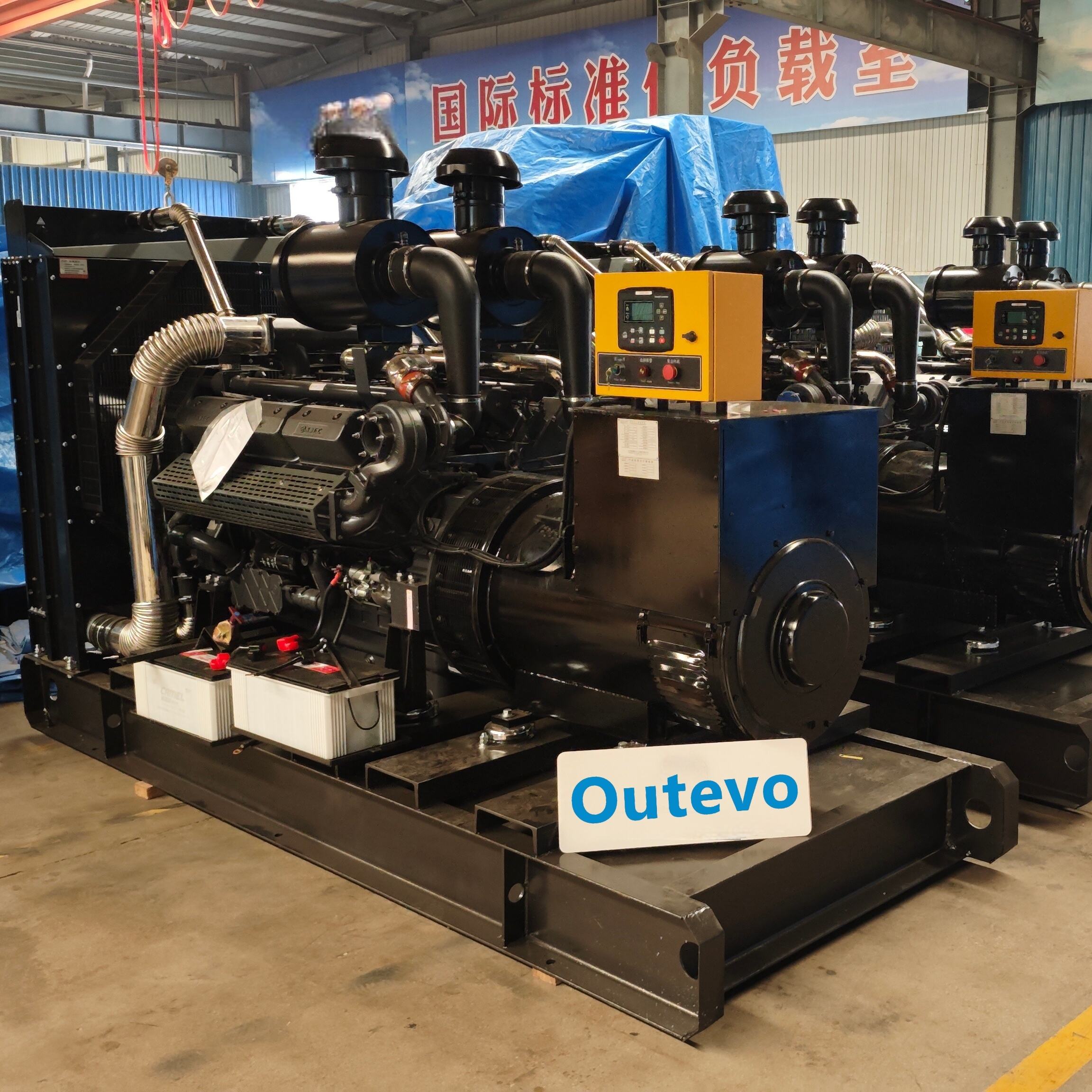
Why Voltage Stability Directly Determines High Efficiency Diesel Generator Performance
Voltage stability is the cornerstone of performance in high efficiency diesel generators, directly impacting operational reliability and energy savings. Fluctuations beyond ±1% tolerance—common during load shifts—trigger equipment malfunctions, data corruption, and premature wear in sensitive industrial machinery. For example, automotive manufacturing lines face production losses averaging $740k/hour (Ponemon Institute, 2023) when voltage sags disrupt robotic systems. Precise regulation (±0.5%–1%) prevents these losses by:
- Eliminating harmonic distortions that waste 8–12% of generated power as heat
- Reducing mechanical stress on windings and bearings to extend component lifespan by 30%
- Ensuring phase balance to avoid neutral current imbalances that degrade fuel efficiency
Advanced automatic voltage regulators (AVRs) achieve this stability through real-time excitation control, dynamically adjusting magnetic fields to maintain output within 230V/400V ±1% across 0–100% load transitions. This precision is non-negotiable in critical sectors like healthcare or data centers, where sub-cycle voltage deviations can collapse life support systems or erase server storage. Ultimately, voltage stability transforms generators from backup assets into efficiency multipliers—cutting downtime costs while optimizing every liter of diesel consumed.
The Automatic Voltage Regulator (AVR): Core Enabler of Stable Output in High Efficiency Diesel Generators
The AVR (Automatic Voltage Regulator) sustains voltage stability through three core mechanisms: voltage sensors continuously monitor output levels; feedback circuits process deviations in real time; and excitation current adjusts instantly to counteract load shifts. This closed-loop control responds within 0.3 seconds to load changes—preventing damaging voltage drops during motor startups and suppressing dangerous surges when equipment shuts down.
How AVR sensing, feedback, and excitation control preserve voltage accuracy under dynamic loads
- Sensing phase: Magnetic pickups detect voltage fluctuations at generator terminals
- Feedback processing: Microprocessors compare readings against preset values (e.g., 480V)
- Excitation correction: Field current to the rotor increases or decreases proportionally
- Dynamic compensation: Maintains ±2% accuracy during 0–100% load transitions
- Harmonic filtration: Reduces waveform distortion below 5% THD per IEEE 519-2022
AVR’s rapid adjustments protect connected equipment from voltage-related failures—enabling food processing plants to maintain freezer temperatures, medical facilities to preserve life-support systems, and data centers to avoid server crashes.
Critical regulation tolerance: Why ±0.5%–±1% is essential for sustained high efficiency diesel generator operation
Tighter voltage tolerance directly impacts generator efficiency and lifespan. Poor regulation wastes fuel through incomplete combustion. Voltage swings above ±2% cause:
| Impact | Consequence | Efficiency Loss |
|---|---|---|
| Overvoltage (>105%) | Insulation breakdown | 8–12% increased fuel consumption |
| Undervoltage (<95%) | Motor overheating | 15% reduced alternator efficiency |
| Imbalance (>2% phase variance) | Rotor vibration | $18k premature bearing replacement |
Maintaining ±0.5%–±1% tolerance ensures optimal magnetic field strength, minimizing copper and iron losses in windings. Generators achieve 95%+ efficiency only within this range (NEMA MG-1-2021). Precision regulation reduces maintenance costs by 30% over 10,000 operating hours.
Step-by-Step AVR Adjustment Protocol for Reliable Voltage Stability
Properly adjusting the Automatic Voltage Regulator (AVR) is essential for maintaining consistent power quality in high efficiency diesel generators. This calibrated process ensures voltage stability within critical tolerance thresholds (±0.5%–1%) under all operating conditions.
No-load calibration: Setting base reference voltage with precision multimeter verification
Begin with the generator at idle to establish baseline voltage. Use a multimeter with ≤0.1% accuracy to verify output aligns with manufacturer specifications. Adjust the AVR reference potentiometer until voltage stabilizes at the target value (typically 230V or 400V for three-phase systems). Record this base setting as the foundation for load testing.
Load-conditioned fine-tuning: Validating stability across 25%, 50%, 75%, and 100% load profiles
Progressively apply electrical loads while monitoring voltage fluctuations. At each increment (25%, 50%, 75%, full load), allow 3–5 minutes for stabilization. If deviations exceed 0.5% from baseline:
- Adjust excitation control to correct voltage dip or surge
- Recheck under the same load after 120 seconds
- Verify harmonic distortion remains <5% THD
Repeat until all load stages maintain voltage within ±0.5% tolerance. This validation prevents winding stress and efficiency losses during real-world operation.
Three-Phase Voltage Balance: Protecting Efficiency and Longevity in High Efficiency Diesel Generators
Measuring and correcting phase-to-phase voltage deviation to prevent winding stress and harmonic losses
Maintaining voltage balance across all three phases is non-negotiable for optimal performance in high efficiency diesel generators. Industry standards mandate voltage deviations below 2% between phases to prevent destructive consequences. Imbalances exceeding this threshold induce overheating in stator windings—accelerating insulation degradation by up to 50%—while harmonic distortions amplify core losses by 3–5%.
Measure phase-to-phase variance using a true-RMS multimeter during 25–100% stepped load tests. Correct deviations through:
- Neutral grounding verification: Ensure <1Ω resistance to stabilize reference voltage
- Load redistribution: Rebalance single-phase loads across phases
- AVR calibration: Adjust excitation currents to equalize output
Unbalanced voltages force generators to work 15% harder to deliver equivalent power, directly undermining fuel efficiency. Proactive balancing reduces winding stress by 30% and harmonic losses by 22%, extending operational lifespan while preserving the generator’s peak efficiency.
Frequently Asked Questions (FAQ)
What is voltage stability?
Voltage stability refers to the ability of electricity-generating equipment, such as diesel generators, to maintain a consistent and regulated voltage level, even during load changes.
How does an AVR improve diesel generator performance?
An Automatic Voltage Regulator (AVR) optimizes generator performance by ensuring voltage stability through real-time monitoring, feedback, and adjustments to excitation currents.
What happens if voltage deviations exceed ±1%?
Voltage deviations can cause equipment malfunctions, energy losses, and accelerated wear, ultimately reducing generator efficiency and lifecycle.
Why is three-phase voltage balance important?
Three-phase voltage balance prevents issues like overheating and harmonic distortions that damage the generator and affect fuel efficiency.
How do you adjust an AVR for optimal performance?
Adjust an AVR by calibrating at no load, progressively testing under various loads, and ensuring deviations remain within ±0.5% tolerance.
Table of Contents
- Why Voltage Stability Directly Determines High Efficiency Diesel Generator Performance
- The Automatic Voltage Regulator (AVR): Core Enabler of Stable Output in High Efficiency Diesel Generators
- Step-by-Step AVR Adjustment Protocol for Reliable Voltage Stability
- Three-Phase Voltage Balance: Protecting Efficiency and Longevity in High Efficiency Diesel Generators
- Frequently Asked Questions (FAQ)