How to specify emergency generator sets that restore power quickly and safely — load staging, changeover, cabling, controls and site readiness.
When a supply fails, the question that matters is not how large a generator can be delivered, but how quickly a defined block of load can be re-energised without creating a second failure. Restoration speed is an engineering outcome. It depends on how the generator set is matched to the load being picked up, how the changeover is arranged, how the cables reach the point of supply, how the unit is protected, and how familiar the site team is with the sequence they are expected to follow.
Shanghai Outevo Machinery Co., Ltd. has supplied diesel and gas generator sets since 2006. The company's current website presents a range of 10–3,750 kVA when applicable, across open-frame, silent, containerized and trailer-mounted configurations. Every rating, enclosure and accessory package is a project-specific configuration decision, confirmed against the actual load list, site conditions and installation arrangements.
This article sets out how buyers, consultants and site engineers can think about rapid restoration: what has to be decided before an emergency, what usually slows restoration down, and how the generator set should be configured so that the answer to "can we energise now?" is yes.
A power failure rarely leaves a site with a single, steady demand. Loads come back in groups. Pumps restart, compressors trip on their first attempt, control systems reboot, variable-speed drives draw current while capacitors charge, and building services such as ventilation and lifts re-engage at the same moment. If a generator set is sized only on the sum of connected load, the first minute of restoration can be the most electrically demanding moment of the entire event.
Two consequences follow. First, the generator set must be reviewed against the load profile at the moment of pickup, not only the steady-state operating load. Second, the restoration plan must define which loads are permitted to start together and which must wait. A generator set that is slightly larger and correctly sequenced will usually restore a site faster than a much larger set energised into an uncontrolled load block, because the sequence avoids the protection trips that force the process to start again.
Restoration also has a physical dimension. A unit that cannot be positioned, cabled and connected is not available, whatever its rating. Access routes, hard standing, cable lengths, exhaust direction, cooling airflow, fuel connection and the position of the changeover device all determine the time between arrival and energisation.
Four capabilities have to exist before the event, not during it.
A defined restoration block. Someone must have decided which circuits will be restored first, which will remain off, and what the resulting demand is at each step. A written schedule with load values, starting methods and priority order converts an emergency into a procedure.
A compatible interface. The generator set must connect to the installation through a changeover arrangement that is rated, interlocked and understood. Manual changeover, breaker-based transfer or a temporary distribution board each impose different requirements on the generator's output protection and on the operator.
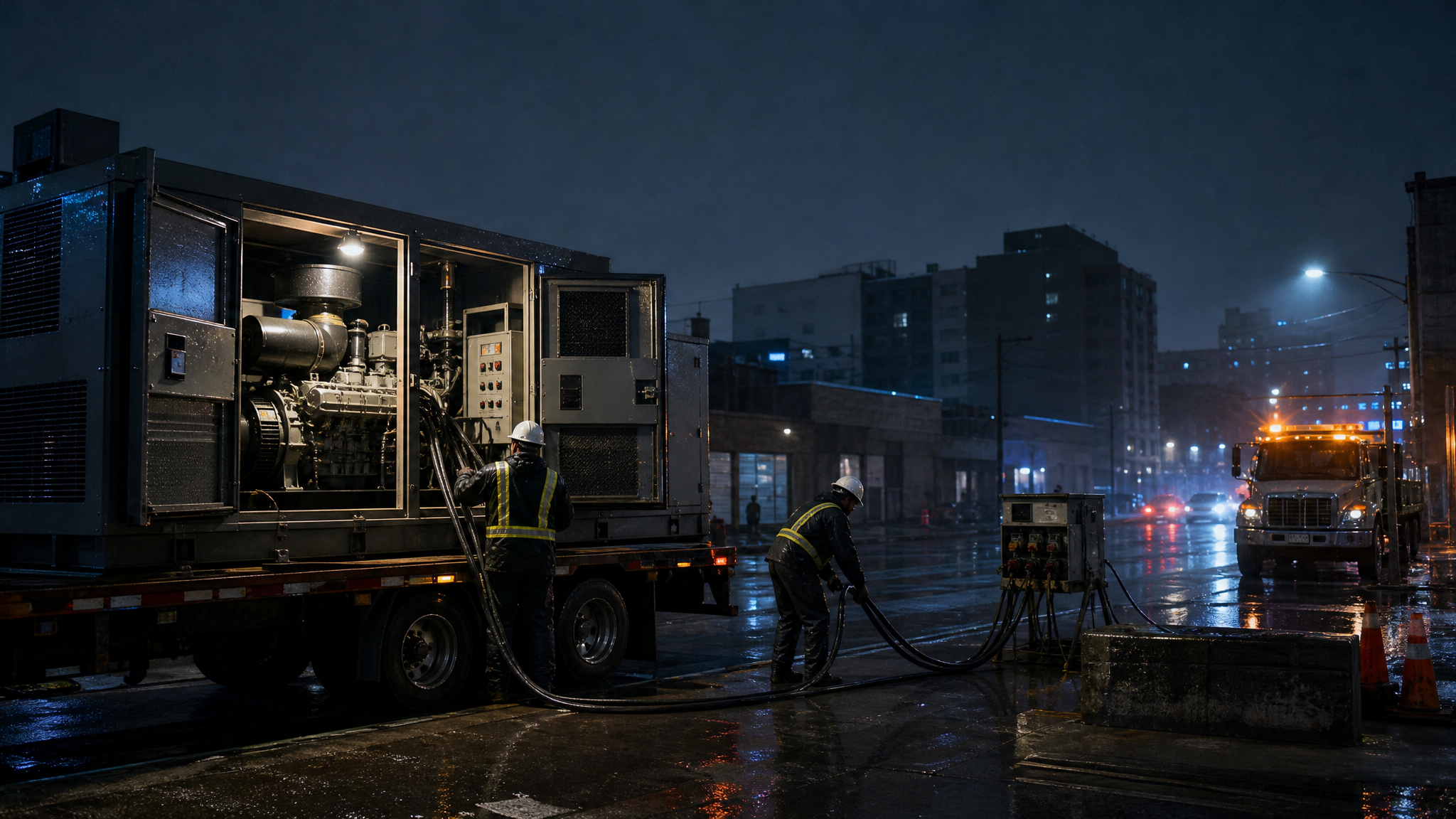
A practical cable route. Temporary power fails more often on cable management than on generation. Cable length, voltage drop, bending radius, protection against traffic and water, and the earthing arrangement at the point of connection all need to be settled in advance.
A unit that is ready. Fuel level, battery condition, coolant, oil, control settings and pre-start checks should be part of a routine, not a discovery. A generator set that has been sitting unused without attention is a liability at the moment it is needed.
The starting point is a load list, not a target rating. For each load, record the running kW, power factor, starting method, starting current characteristic, duty cycle and whether it can be sequenced. Motors that start direct-on-line, large drives, welding equipment, battery chargers, UPS systems and electronic controls all behave differently during pickup, and each imposes a different requirement on the generator's voltage and frequency response.
Three review questions usually decide the configuration:
Where the restored block is large or the site has several separate supply points, more than one generator set may be the better architecture. Parallel operation allows staged restoration and provides redundancy, but it adds control, protection and synchronization requirements that must be designed rather than improvised.
The four enclosure families address different restoration scenarios, and the choice is usually decided by where the unit will stand and how long it will stay.
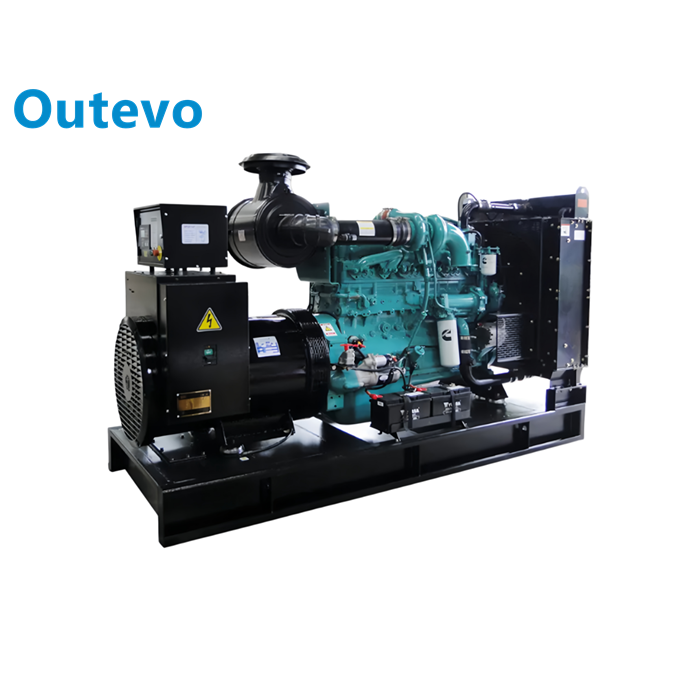
Open-frame generator sets give the shortest access to the engine, alternator and control panel, which suits installations with a dedicated plant room or a protected compound and a maintenance team on site. They are also easier to inspect during a long outage.
Silent generator sets are appropriate where the unit will run near occupied buildings, site offices, shelters or residential boundaries. Acoustic treatment adds mass and restricts access, so service doors and ventilation paths must be planned into the position, not added later.
Containerized generator sets package the unit, controls and often fuel arrangements into a transportable enclosure. They suit longer restoration campaigns, exposed sites and locations where weather protection and security matter. Lifting points, ventilation, exhaust routing and access for service all need to be confirmed against the position.
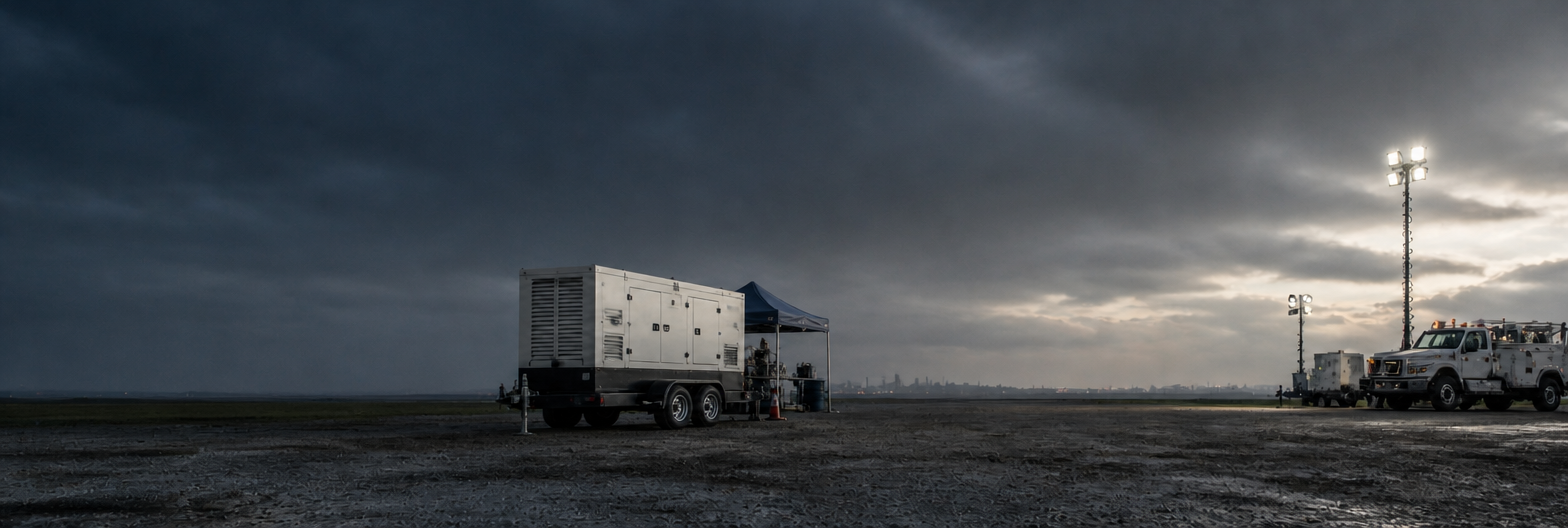
Trailer-mounted generator sets trade some enclosure volume for mobility. They are the natural choice when the restoration point is not known in advance, when the unit must move between locations, or when the site has no permanent foundation.
Beyond the enclosure, several options directly affect restoration time: a control panel that supports the required changeover logic, output breakers rated for the load block, an external connection point suitable for the site's cable set, a fuel arrangement that matches the expected running duration, and lifting or towing provisions compatible with the equipment available locally.
Restoration speed is often lost at the interface. The changeover device must prevent the generator from being connected in parallel with a live utility supply unless that paralleling is intentional and protected. Mechanical interlocks, key-operated transfer switches or breaker interlocking all achieve this, but each changes the operating procedure.
Earthing is equally important and frequently overlooked in temporary arrangements. The earthing philosophy at the point of supply must be established before connection, particularly where the generator is supplying a distribution system with its own protective devices. Protection settings should be coordinated so that a fault downstream trips the downstream device rather than the generator's main breaker, which would otherwise take the whole restored block offline.
Where the generator is the only source, the neutral arrangement and the operation of residual current devices need to be reviewed together. These are design decisions that belong in the restoration plan, not in a conversation at the connection point during an outage.
A restoration deployment has three clocks running: the electrical work, the fuel supply and the site coordination. All three need an owner.
Positioning should consider ground bearing capacity, distance from doors and air intakes, exhaust discharge away from occupied areas, clearance for cooling airflow and access for service. Cable routes should avoid standing water, vehicle traffic and sharp edges, and should be short enough to keep voltage drop within the design limits of the restored loads.
Fuel is the constraint that most often ends a restoration early. The plan should state the expected running duration, the consumption at the anticipated load, the refuelling method, the access route for a tanker, and the minimum level at which refuelling must be triggered. Where a tanker cannot reach the unit, a day tank or an intermediate storage arrangement has to be designed in advance.
Coordination covers people as much as equipment. The site needs a named person who authorises energisation, a person who operates the changeover, and a communication path to the loads being restored. In multi-tenant or public infrastructure settings, the sequence also has to be agreed with the parties affected by each step.
Emergency equipment is judged in the first hour of use, but its condition is set by the months before. A practical readiness routine includes:
During operation, the priorities are monitoring load against rating, watching coolant temperature and oil pressure, keeping the exhaust path clear, and recording the running hours and any alarms. After the event, the unit should be inspected and the fuel and consumables restored before it returns to standby.
A generator set is only as fast as the information behind it. Before requesting a configuration review, prepare a brief that covers the load list and the largest step change, the duty expected during restoration, the required voltage and frequency, the intended location and access, the available cable and changeover arrangement, the fuel plan, the ambient conditions and the expected duration of operation.
Shanghai Outevo Machinery Co., Ltd. reviews these inputs against the current product range of 10–3,750 kVA when applicable, and proposes a configuration for confirmation. Final rating, enclosure, control philosophy and accessories remain subject to the approved project specification, site conditions and the installation design.
There is no single correct rating. The set must accept the largest block of load that will be applied at one time, including motor starting, and must then carry the sustained load at the duty the site requires. The rating also depends on ambient temperature, altitude, voltage and the acceptable margin for future growth. A load list and starting method review is the only reliable basis for a recommendation.
Yes, provided the connection is made through a changeover arrangement that prevents unintended paralleling with the utility supply, and provided the earthing and protection design has been reviewed for the temporary configuration. The connection point, cable rating and protection settings should be confirmed by the responsible electrical engineer before energisation.
It depends on where the unit will run and for how long. Open frame gives better service access and suits protected plant areas; silent configurations are preferable near occupied buildings, shelters or residential boundaries. Containerized units suit longer or exposed deployments, and trailer-mounted units suit changing locations.
The fuel plan should be derived from the expected running duration, the load profile and the consumption at that load, plus a reserve for delayed refuelling. It should also define the refuelling method and the minimum level that triggers action, because access for a fuel tanker is often the real constraint during a wide-area outage.
Testing intervals are usually set by the operator's maintenance policy and the criticality of the load, but the test should include running under load rather than idling only. Records of load, duration, alarms and consumables give the evidence needed to confirm the unit will perform when called on.
Yes. Outevo's current range covers 10–3,750 kVA when applicable, in open-frame, silent, containerized and trailer-mounted configurations, and multi-unit arrangements can be reviewed where staged restoration or redundancy is required. The final architecture, including any paralleling requirement, is confirmed as a project-specific configuration.
Send Shanghai Outevo Machinery Co., Ltd. the load list, the largest motor or drive, the intended connection point, the site conditions and the expected duration of operation. The review can then address the points that determine restoration time: rating, enclosure, control and changeover interface, cabling, fuel arrangement and the sequence in which load will be restored.
Request a project review from Outevo
For related configurations, see Outevo's open-frame generator sets, silent generator sets, container generator sets, trailer generator sets and solution case studies.

Shanghai Outevo Machinery Co., Ltd. provides custom power supply solutions for industrial applications. Our diesel generator sets deliver reliable, stable electricity with 24/7 production and nationwide support. Request a quote today.
Copyright © Shanghai Outevo Machinery Co., Ltd Privacy Policy