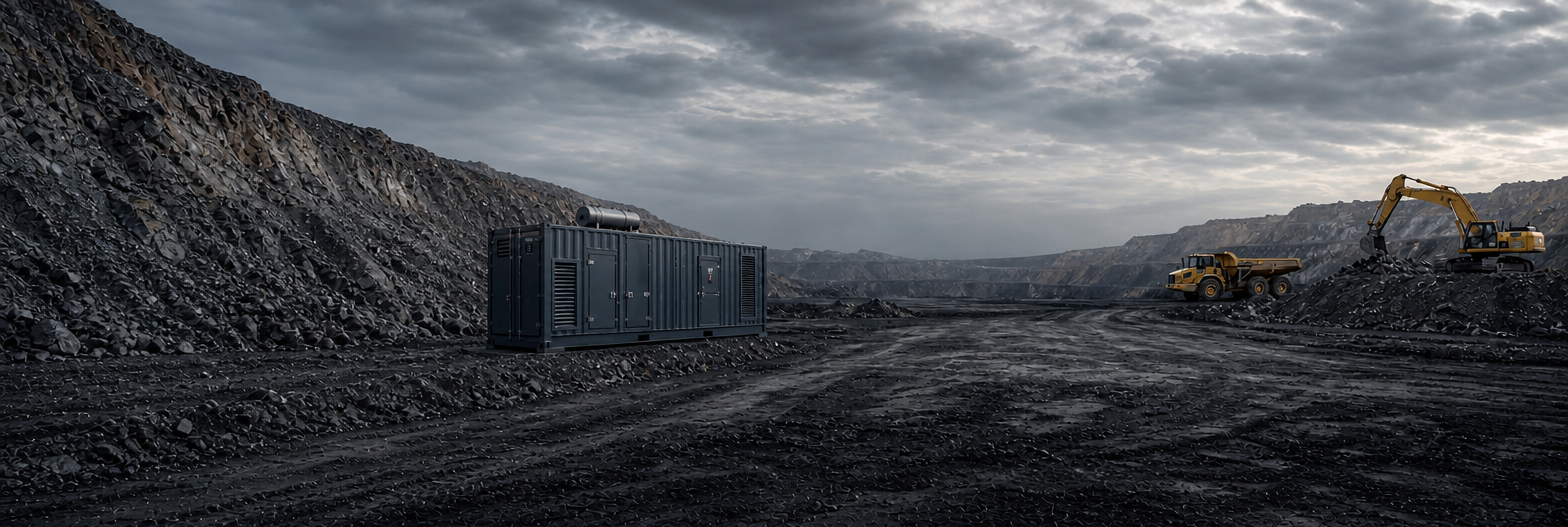
Generator sets for mining and construction sites. Outevo reviews load, duty, climate, mobility and installation requirements for project-ready power.
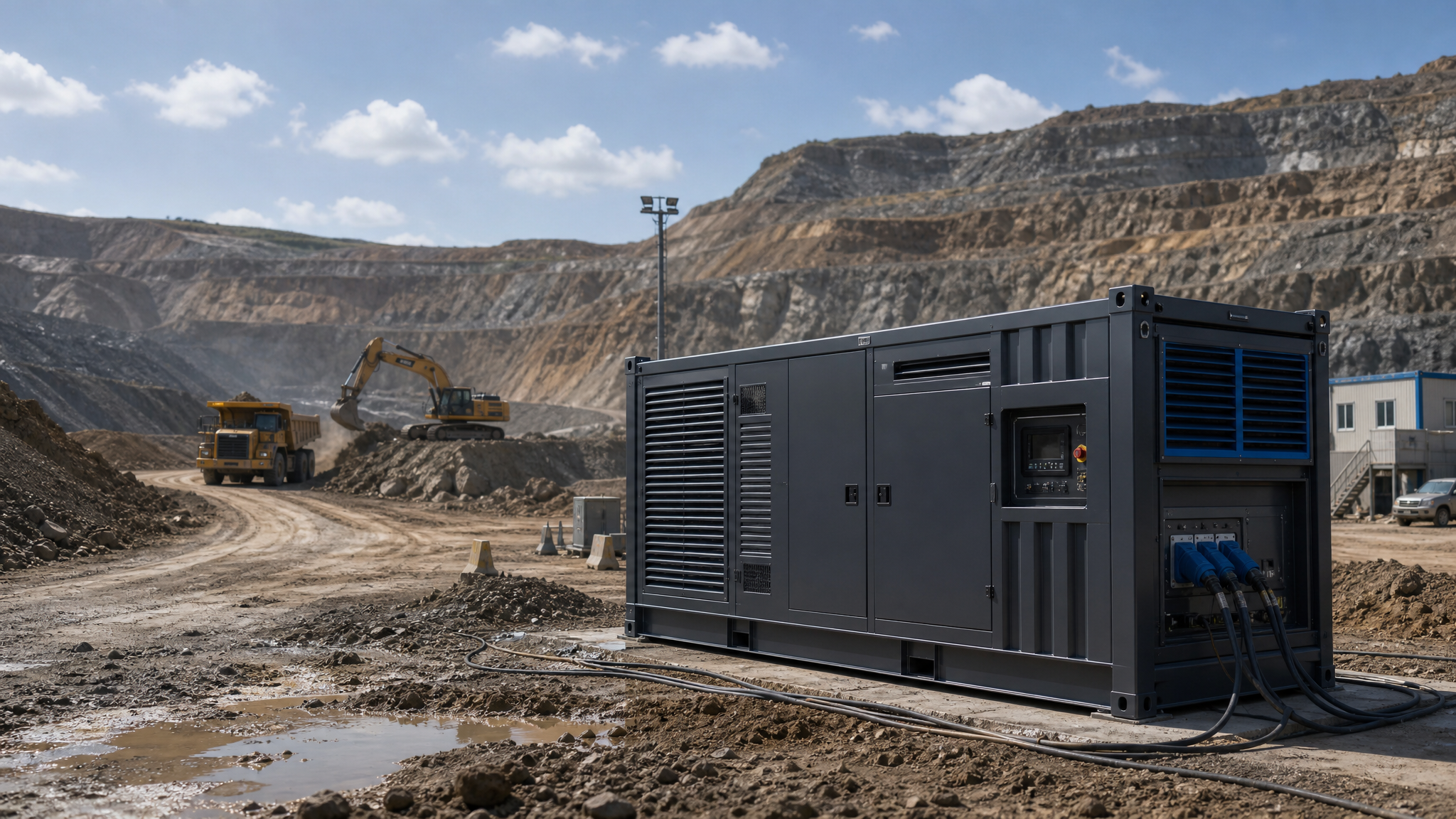
Mining and construction projects need more than a generator with a large nameplate. They need a power system matched to the real site: changing loads, motor starting, dust, heat, cold, altitude, limited access, temporary distribution and the operating schedule. Outevo provides project-oriented diesel and gas generator-set solutions for mining operations, aggregate sites, construction projects, camps, workshops, dewatering systems and other remote or developing infrastructure.
The practical answer is to select the generator set around the application rather than around a model name. The review should cover prime or standby duty, the connected load, starting requirements, voltage and frequency, site conditions, mobility, enclosure, fuel arrangement, control requirements and future expansion. Outevo’s engineering team uses this information to define a suitable configuration and clarify the points that must be confirmed before manufacturing and delivery.
Outevo has supplied generator-set solutions since 2006. Its current website presents diesel and gas generator sets across a source-dependent range of 10–3,750 kVA, with open-frame, silent, containerized and trailer-mounted configurations available for different site requirements. Final rating, configuration and accessories remain subject to the approved project specification.
A remote mine, a quarry and a construction site may all need diesel generator sets, but their electrical and operating conditions are not the same. A mine may run crushers, conveyors, pumps, ventilation, camp services and communications at the same time. A construction project may have a changing load as cranes, welding equipment, lighting, pumps and temporary facilities move through different phases. A quarry may require dependable motor starting for crushing and screening equipment, while a remote camp may place greater emphasis on continuous prime power and service access.
This is why a suitable mining generator set must be evaluated as part of a complete power system. The engine, alternator, controller, cooling system, enclosure, protection, fuel system, distribution equipment and installation environment all affect the result. Load steps and motor starting can be more important than the average running load. Dust and heat can reduce cooling margin. Poor access can turn a routine service task into a long interruption.
A project-oriented approach helps the buyer avoid two common problems: selecting a set that is too small for the actual duty, or paying for a configuration that does not fit the site. The right review creates a clear technical basis for comparing suppliers and makes the final equipment easier to install, operate and maintain.
First define whether the generator set will provide prime power, standby power, emergency power or a temporary construction supply. Then list the loads by operating state rather than adding only the nominal ratings. Crushers, conveyors, dewatering pumps, ventilation fans, welding equipment and large motors can create starting demands that change the required generator-set configuration.
The project brief should identify the normal running load, the largest motor or motor group, the expected starting sequence, load-step requirements, non-linear loads, power factor and any future expansion. If the site will use multiple generator sets, the engineering review should also address synchronizing, load sharing, redundancy and the sequence for adding or removing units.
An open-frame generator set can be practical in a controlled plant area or a location where service access and ventilation are the first priorities. A silent generator set can be more suitable where the equipment is close to offices, accommodation, hospitals, urban construction areas or other noise-sensitive locations. A containerized generator set can simplify transport, protection and deployment at a remote mine, project camp or long-duration construction site. Trailer-mounted equipment can support relocation as the working area changes.
The selection should also consider dust, humidity, rain, salt exposure, ambient temperature, altitude, ventilation, exhaust routing and lifting or transport arrangements. These points should be confirmed in the equipment specification and installation design rather than assumed from a generic product image.
A generator set is only as useful as the system connected to it. The project review should cover the control panel, protection settings, automatic transfer requirements, remote monitoring, cable routing, fuel storage, earthing, emergency isolation and access for routine maintenance. For a construction site, the design should also account for relocation and changing temporary distribution. For a mine, the review should account for long operating hours, site communications, dewatering continuity and the distance between generation and loads.
Local electrical regulations, site safety rules and the approved installation design remain essential. Outevo can use the project brief to clarify generator-set configuration points, but final installation, protection coordination and commissioning should be completed by the responsible project engineers and qualified local personnel.
Outevo’s current product range provides several build paths instead of forcing every project into one enclosure type.
These configurations can be discussed with Outevo as a project comparison rather than a simple product lookup. The final choice depends on duty, site, load, logistics, environment and local requirements.
Mining and construction power systems often support several loads at the same time. A correctly configured generator set may serve the following applications:
The equipment should not be selected from the application label alone. The project team should provide the load list, duty cycle, operating environment, distribution arrangement and expected expansion so the supplier can review the actual configuration.
A reliable project supply chain connects the technical discussion with the delivered equipment. Outevo’s published product information describes generator sets that are assembled and load-tested before shipment, with engine and alternator options matched to the selected rating and application. For a mining or construction project, the buyer should request the approved data sheet, dimensional drawing, control description, test documentation and installation requirements for the exact build.
A practical project review normally follows this sequence:
This process gives procurement, engineering and site operations a shared basis for decision-making. It also reduces the risk that a generator set is purchased before the site constraints are understood.
There is no responsible single size for every mine or construction site. The required rating depends on the running load, motor-starting demand, power factor, duty, voltage, frequency, environment, redundancy and future expansion. Send Outevo the load list and operating conditions so the rating can be reviewed against the actual project rather than estimated from the site name.
A containerized generator set can be suitable when the project needs a protected, transportable package for a remote or long-duration site. The decision should also consider access roads, lifting, ventilation, exhaust, service doors, fuel storage, noise, ambient conditions and local installation requirements. Outevo’s published containerized models include configurations presented for mining and other critical-power applications.
Choose the enclosure according to the installation environment. Open frame can be practical where the generator room already provides protection and service access. Silent can be preferable where the equipment is near offices, accommodation, urban areas or other noise-sensitive locations. The final choice should be based on the approved site layout, acoustic requirement, ventilation and service plan.
It can be configured for these applications when the rating, alternator, controls and starting method are matched to the motor loads. Crushers, conveyors and pumps can create high starting or step-load demands, so the supplier needs the motor ratings, starting method, sequence and simultaneous-load assumptions before confirming the configuration.
Include the required power and duty, voltage, frequency, phase, load list, largest motors, starting method, altitude, ambient temperature, dust and humidity conditions, fuel type, enclosure preference, noise requirement, transport constraints, quantity, destination and commissioning expectations. Photos, a site layout or an existing single-line diagram can also help the technical review.
Outevo’s website presents open-frame, silent, containerized, trailer-mounted, diesel and gas configurations. Customization should be discussed against the project brief and confirmed in the approved technical specification. Share the required power, electrical parameters, application, destination and site conditions to identify which options require confirmation.
A dependable site power decision begins with a clear project brief. Contact Outevo with the required power, voltage, frequency, duty, application, destination, quantity and operating environment. The engineering discussion can then focus on configuration fit: generator rating, enclosure, controls, cooling, fuel, mobility, protection, testing and delivery coordination.
Before sending an inquiry, include the load list, largest motor, starting method, site temperature, altitude, dust or humidity exposure, preferred enclosure, fuel arrangement and delivery destination. If the project is still at the planning stage, a preliminary brief is still useful: it allows the power architecture and open technical questions to be identified before procurement documents are finalized.
Request a project review from Outevo
For related equipment, see Outevo’s container generator sets, open-frame generator sets, silent generator sets, trailer generator sets and complete solution case studies. These links help buyers compare equipment types and review application examples before discussing a project-specific configuration.

Shanghai Outevo Machinery Co., Ltd. provides custom power supply solutions for industrial applications. Our diesel generator sets deliver reliable, stable electricity with 24/7 production and nationwide support. Request a quote today.
Copyright © Shanghai Outevo Machinery Co., Ltd Privacy Policy


