Procurement Guide: Choosing Silent Generator Sets for European Data Centres
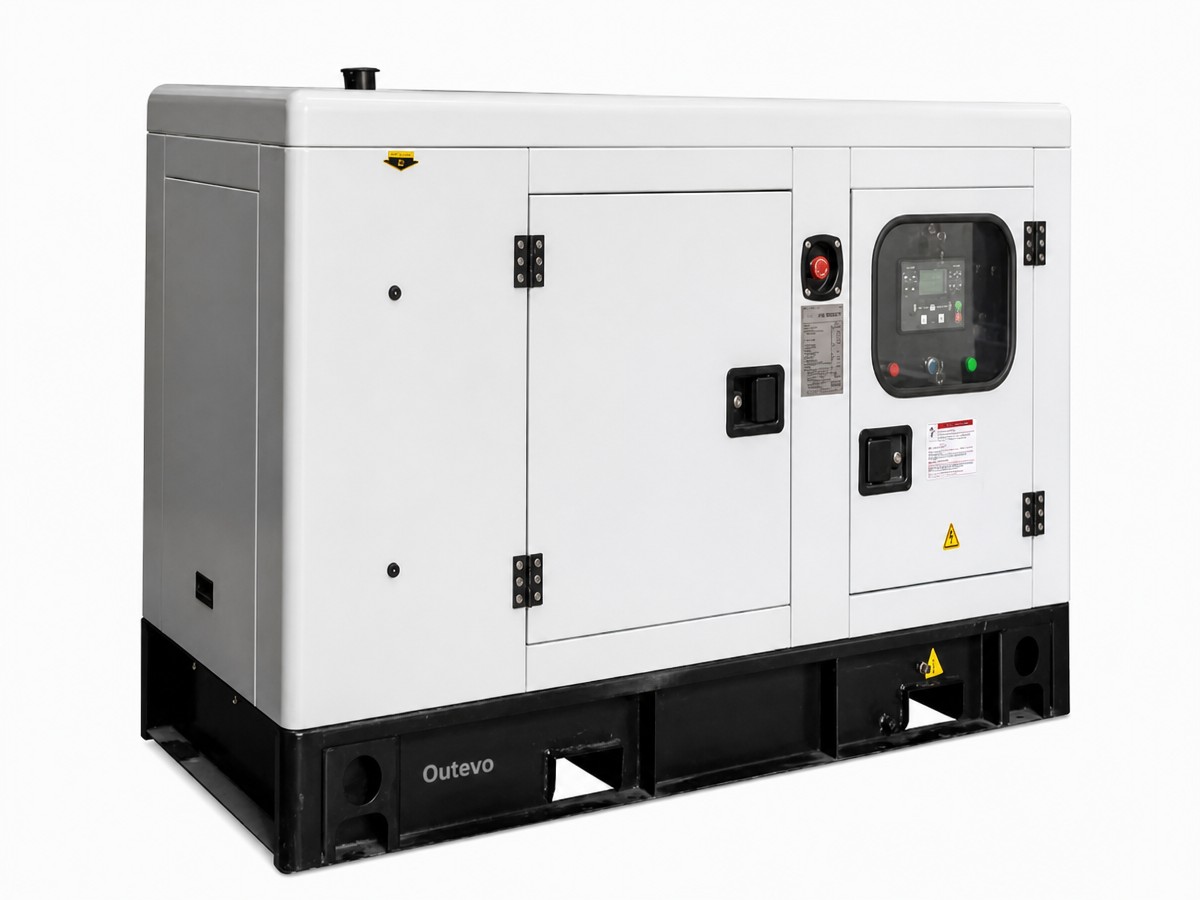
For European data centres, the silent generator set should be treated as part of the critical power system, not just an emergency backup. The right unit must keep noise low, respond quickly to load changes, meet local compliance expectations, and remain easy to maintain over many years.
Here are the points we recommend focusing on during procurement.
1. Confirm the power rating matches data centre duty
Data centre generators should be sized for real IT load, UPS recharge, cooling restart, and future expansion. For mission-critical sites, look at COP / PRP ratings rather than ESP-only ratings, especially if the generator may run for extended periods during grid outages.
Also check whether the project needs N+1 or 2N redundancy, and whether the generator must support parallel operation with other units.
2. Match the power combination to real site load
A practical power combination should cover IT load, UPS systems, precision cooling, lighting, fire systems, and future expansion.
Typical silent diesel generator power combinations for data centres include:
Smal /edge data centres:100–500 kVA
Medium data centres: 500–1,500 kVA
Large /hyperscale-ready sites: 1,500–3,000+ kVA, often in parallel sets
If the site has high step-load demand, such as AI servers or large UPS banks, the generator should demonstrate strong transient response and stable voltage recovery after sudden load changes.
3. Specify the right enclosure type and noise level
Silent is not a fixed value. Always ask for the actual sound level, measurement distance, and test standard.
For urban or residential areas in Europe, many projects target lower noise levels at the site boundary. Common configurations include:
Standard soundproof canopy – suitable for industrial sites with moderate noise limits
Super-silent canopy – better for hospitals, offices, and mixed-use areas
Containerised power station – suitable for 200–3,000+ kVA data centre applications, with acoustic lining, controlled ventilation, and maintenance access
Useful enclosure features:
Acoustic insulation and silencer
Intake and exhaust attenuation
Vibration-damped mounting
Weatherproof and corrosion-resistant housing
Safe access doors and internal lighting
Bunded base fuel tank or spill containment
4. Check European compliance before ordering
For the EU market, confirm the following early:
ISO 8528 for generator set ratings and performance
EU Stage V for non-road diesel engine emissions where applicable
CE marking and machinery safety documentation
Local planning rules for noise, exhaust routing, and fuel storage
Stage V compliance is especially important for newer installations, because it may require DOC, DPF, and SCR aftertreatment depending on engine power range.
5. Prioritise electrical performance and control integration
Data centre loads are sensitive to voltage, frequency, and harmonic distortion.
Recommended checks:
Voltage regulation within tight limits
Stable frequency under step load
Compatibility with UPS and non-linear IT loads
Low harmonic impact on connected equipment
Auto start/stop on mains failure
Remote monitoring, fault alarms, and Modbus/SNMP support
Parallel control with balanced load sharing
Quick recommendation
For most European data centre projects, a solid baseline would be:
50 Hz, three-phase, COP/PRP/DCP-rated set depending on run-time needs
Silent or super-silent canopy / containerised solution
EU Stage V-compatible engine where required
ISO 8528-aligned performance and noise testing
Parallel-ready controller with remote monitoring
Bunded fuel system and safe maintenance access
