Building emergency power readiness — deployment planning, fuel strategy, site coordination, drills and records that make standby capacity usable under pressure.
Most organisations that own standby generation believe they are prepared, and most of them are partly right. The equipment exists, the maintenance contract is in place, and someone knows where the changeover switch is. What is often missing is the layer that turns equipment into capability: a deployment plan that has been tested, a fuel strategy that survives a wide-area event, defined roles for the people who will make decisions, and records that show what actually happened.
Emergency power readiness is the discipline of building that layer. It applies to data halls and hospitals, but equally to water utilities, manufacturing plants, construction camps, public buildings and any operation where a sustained loss of supply stops the work. The equipment is only one element; the rest is planning, people and logistics.
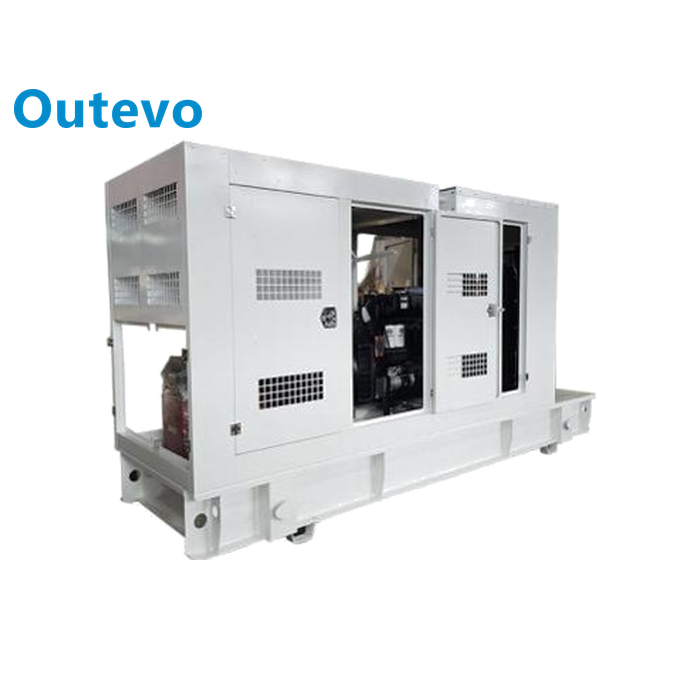
Shanghai Outevo Machinery Co., Ltd. has supplied diesel and gas generator sets since 2006, and its current website presents a range of 10–3,750 kVA when applicable, in open-frame, silent, containerized and trailer-mounted configurations. Readiness planning starts from the same place as any configuration review: the actual load, the actual site and the actual conditions, with the final arrangement confirmed as a project-specific configuration.
Readiness planning begins with a frank assessment of what a loss of supply would mean. Three questions structure it.
What stops first, and what stops next? A ranked list of functions by consequence — safety systems, then production or service delivery, then support functions — determines where limited generation capacity should go. Without that ranking, the first person to arrive at the generator decides the priority.
How long could the outage last? The answer determines fuel endurance, staffing, and whether the plan should assume that the utility supply returns or that it does not. Wide-area events routinely outlast the fuel that sites hold.
What is the single point of failure? One generator, one fuel tank, one changeover switch, one person who knows how to operate it. Each is a vulnerability, and the plan should name them rather than assume resilience that does not exist.
The output of this assessment is a short document: the functions to be protected, the load each requires, the duration to be supported, and the arrangements that will deliver it. That document is the reference for every later decision.
A deployment plan describes how power reaches the load when the normal supply fails. It should be specific enough that someone who was not involved in writing it could execute it.
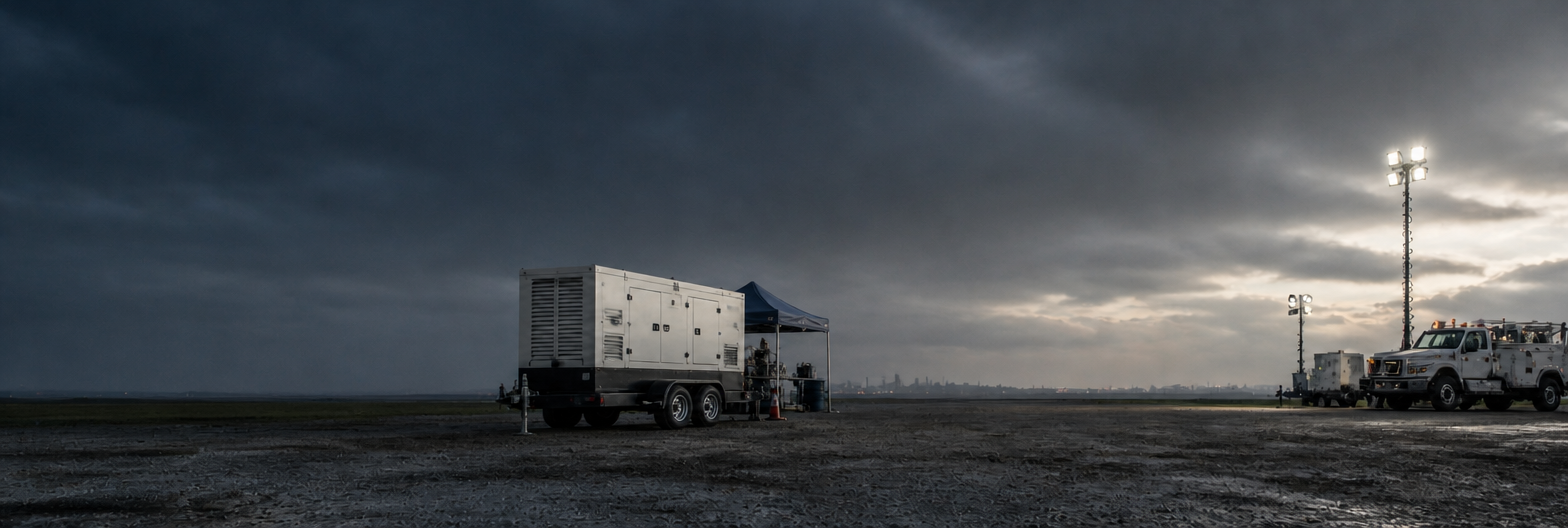
Positions. Where each generator will stand, how it gets there, what the ground will support, and where the exhaust and cooling air will go. For mobile units, alternative positions should be identified in case the primary one is blocked by flooding, debris or parked vehicles.
Access and transport. The route in, the vehicle required, the lifting arrangements, and the point at which a unit can no longer be moved by hand. Access is frequently the difference between a plan that works and one that does not, particularly where a site has only one entrance.
Cabling. The cable set required for each position, its rating, its route, and how it will be protected. Cable that is stored in a container at the back of the yard, behind a locked gate, is not part of a deployment plan until someone has recorded how it will be retrieved.
Connection and changeover. The physical connection point, the type of changeover, the interlocking that prevents back-feed, and the sequence of operations from arrival to energisation. This sequence should be written down and practised.
Staging. Where equipment waits before deployment, how it is kept ready, and who authorises release. In multi-site organisations, a central staging point with a release procedure prevents the first caller from taking the only available unit.
Fuel is the most common reason a standby supply ends early. A generator with a full tank is a supply with a defined endurance; a generator with an unknown fuel level is a hope.
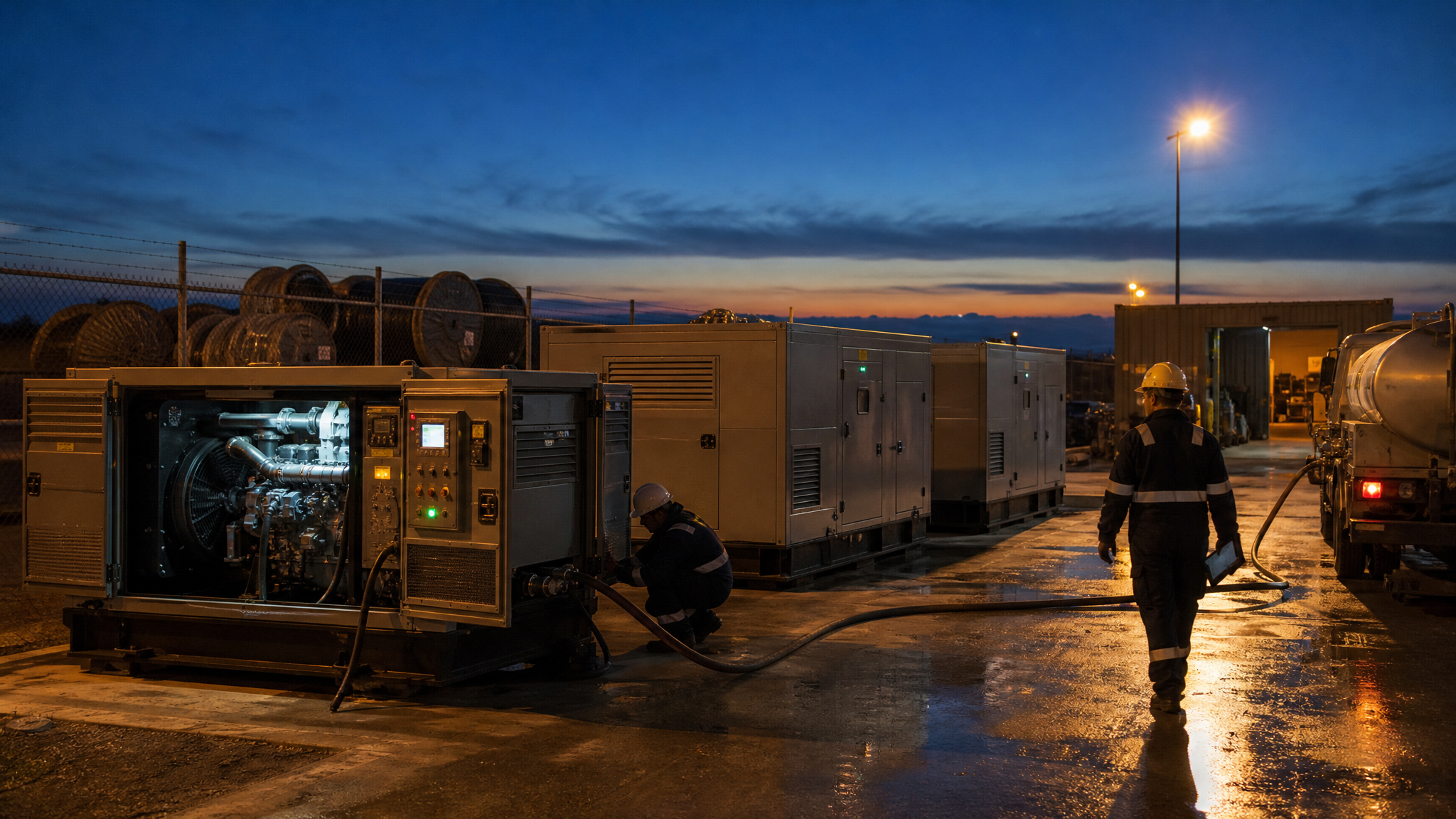
The strategy should state the endurance required, expressed in hours at the expected load, and the storage that provides it. It should also state how fuel will be replenished during an event: who supplies it, how it reaches the unit, what the minimum level is before action is taken, and who is authorised to order it. Where a tanker cannot reach the generator, an intermediate storage and transfer arrangement has to be designed and practised.
Fuel quality is part of the strategy. Diesel stored for long periods can deteriorate, and water ingress through condensation is a persistent problem in part-full tanks. Practices that help include keeping tanks as full as is practical, periodic testing, filtration at the point of transfer, and recording every delivery with its source and quantity.
Refuelling itself carries risk. Spillage, static, hot surfaces and running engines are all hazards, and the procedure should specify whether refuelling takes place with the engine stopped, who supervises it, and how spillage is contained. On sites with bunded tanks, the bund capacity and the drainage arrangement are part of the design.
During an outage, coordination problems consume more time than technical ones. The plan should define roles rather than titles.
Authority to energise. One person should decide when a circuit is energised, and that authority should be documented. In multi-occupancy buildings and shared infrastructure, the same person should be able to speak for all parties affected by each step.
Operation of the changeover. Whoever operates the changeover should have practised it, and should know what to do if the transfer does not complete. A written sequence with a clear abort point is more useful than a general instruction.
Communication. The loads being restored need to know when to expect power and what to do when it arrives. A simple notification chain, agreed in advance, prevents equipment being started into a supply that is not yet stable.
Coordination with the utility and emergency services. Where the site has a utility connection, the network operator needs to know that generation is connected and how back-feed is prevented. Where emergency services are involved, they need to know where generators and cables are, and how to isolate them.
Handover between shifts. Response events outlast shifts. A one-page handover record — what is running, what is fuelled, what is faulty, what was changed — preserves continuity when the original team goes off duty.
A plan that has not been exercised is a hypothesis. Testing should cover three levels.
Equipment testing confirms that the generator starts, carries load and transitions as intended. It should include running under load, not idling, and it should be recorded with the load, duration and any alarms.
Procedure drills walk the team through deployment: retrieving cables, positioning the unit, making the connection, executing the changeover. A drill that reveals a missing cable or an inaccessible position has done its job.
Decision exercises test the human layer: who authorises what, how priorities are set when demand exceeds capacity, and how the organisation communicates with affected parties. These can be short tabletop sessions, and they are usually where the most valuable gaps are found.
Competence should be tracked, not assumed. The people expected to operate the equipment should have current knowledge of the specific installation, not general familiarity with generators.
Readiness depends on small items being present when they are needed: filters, belts, hoses, fuses, batteries, cable connectors, and the tools to fit them. A spares list derived from the equipment actually installed is more useful than a generic kit.
Documentation should include the single-line diagram of the temporary supply, the changeover procedure, the load priority list, the fuel plan, contact details for the responsible people, and the maintenance history of each unit. It should be stored where it can be reached without power, which in practice means a printed copy as well as a digital one.
Records from real events are the most valuable input to the next revision of the plan. Running hours, fuel consumed, loads carried, faults, delays and decisions all show where the plan met reality and where it did not.
A short after-action review, held while the details are fresh, converts experience into improvement. Four questions are enough: what was supposed to happen, what happened, why the difference, and what will change. The answers should update the load list, the deployment plan, the fuel strategy and the training programme, and the revised plan should be re-tested rather than filed.
Readiness degrades quietly. Equipment drifts out of condition, fuel ages, staff change, and layouts are modified without the plan being updated. A scheduled annual review, with a practical test, keeps the capability real.
Organisations that are genuinely prepared tend to have done the same things: they ranked their loads, defined the duration they need to survive, positioned equipment where it can be reached, secured fuel for that duration, assigned authority clearly, and practised the sequence. The generator set matters, but it is the plan around it that determines whether the site stays running.
Shanghai Outevo Machinery Co., Ltd. reviews standby and emergency requirements against its current range of 10–3,750 kVA when applicable, and proposes configurations for open-frame, silent, containerized or trailer-mounted deployment. Final rating, fuel arrangement, control and protection specification and accessories remain subject to the approved project specification and to the site conditions confirmed during the technical review.
It includes a ranked list of loads to be protected, a deployment plan with positions and cable routes, a fuel strategy covering endurance and replenishment, defined roles and authority for energisation, a testing and drill programme, and records that are updated after each event.
Enough for the duration the site has decided it must survive, calculated from consumption at the expected load, plus a reserve for delayed replenishment. During a wide-area outage, the refuelling route is often the constraint, so the plan should identify how fuel reaches the unit.
Intervals are usually set by the operator's maintenance policy and the criticality of the load, but tests should include running under load and exercising the changeover, not only starting the engine. Each test should be recorded with load, duration and any alarms.
One named person, with a documented deputy. In shared buildings or infrastructure, that person should be able to coordinate all affected parties. The authority, and the sequence it applies to, should be written into the plan and practised.
Failures usually come from the supporting arrangements rather than the generator itself: fuel that is low or contaminated, batteries that have not been maintained, changeover procedures that are unfamiliar, or cables and connectors that are missing or damaged when needed.
Outevo reviews load data, duty, site conditions, fuel arrangements and deployment constraints against its current range of 10–3,750 kVA when applicable, and proposes a configuration for confirmation. The final specification is always project-specific and subject to the approved technical requirement.
Send Shanghai Outevo Machinery Co., Ltd. the loads to be protected, the duration to be supported, the site layout and access, the fuel arrangements under consideration and the people expected to operate the equipment. The review can then address the configuration and the supporting arrangements that make the capacity usable when it is needed.
Request a project review from Outevo
For related equipment, see Outevo's silent generator sets, container generator sets, trailer generator sets and solution case studies.

Shanghai Outevo Machinery Co., Ltd. provides custom power supply solutions for industrial applications. Our diesel generator sets deliver reliable, stable electricity with 24/7 production and nationwide support. Request a quote today.
Copyright © Shanghai Outevo Machinery Co., Ltd Privacy Policy