Diesel Generators Become a Mandatory Backbone for AI Development Amid Global Data Center Boom
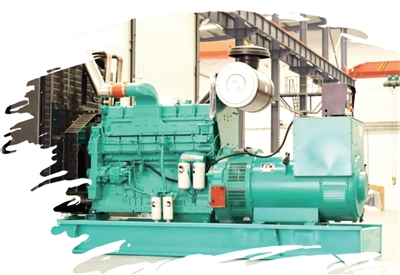
he global construction frenzy of AI data centers is reshaping the supply-demand landscape of diesel generators, a traditional industrial workhorse. With a single high-end AI chip consuming hundreds to thousands of watts, the power density of a GPU-packed server rack has soared from several kilowatts in conventional data centers to hundreds of kilowatts. For data centers housing billions of yuan worth of server equipment, stable power supply is paramount. As a result, diesel generator sets — long regarded as an optional backup solution — have evolved into a mandatory requirement as the final line of power security for data centers.
As global AI computing hubs roll out at an accelerating pace, diesel generators have become a highly sought-after commodity, with order backlogs stretching into 2028 and prices rising by more than 20%, opening a window of opportunity for Chinese domestic manufacturers.
Surging Demand
Data centers and other computing infrastructure deliver services based on continuous power supply to guarantee the security and stability of data storage and processing, making them extremely reliant on reliable electricity.
Multiple data points illustrate the mounting pressure on the demand side. A McKinsey report released in June projected that global data center IT equipment power load will expand from roughly 82 GW in 2025 to around 220 GW by 2030, among which AI-related demand will surge from 44 GW to 155 GW. According to estimates by Huayuan Securities, the global diesel generator market is valued at about $22.6 billion this year, corresponding to demand for approximately 42,000 units.
The demand boom is also reflected in higher backup power configuration ratios. Traditional data centers usually deploy diesel generators under "N+1" or "2N" redundancy architectures, with configuration rates ranging from 80% to 100%. To support the high-intensity computing of AI systems, premium data centers in China have lifted their diesel generator configuration rates to 120%–150%. This means operators are no longer satisfied with "adequate" power backup, but pursue higher redundancy for a greater safety margin.
Order books of leading global equipment makers further testify to the market heat. Zhou Yahong, General Manager of Rolls-Royce Power Systems Greater China, previously stated that 25% of the world’s data centers rely on the company’s mtu 4000 series generators for emergency power backup. The firm supplies around 1,000 generators per year in China, but actual customer demand far outstrips this volume. For high-power backup generators dedicated to data centers, overseas leaders such as Cummins have their production schedules booked out to 2027–2028, while Siemens Energy’s delivery lead time is even longer, stretching to 2029–2030.
According to China Energy News, the current delivery cycle for major global brands has reached 8 to 12 months. The sharp expansion in demand is upending the supply-demand equilibrium that has prevailed in the diesel generator industry for years.
Tight Supply
Amid persistent strong demand, the supply side is struggling to meet near-term needs.
The global diesel generator market is highly concentrated, with production capacity for high-end high-power models almost monopolized by a handful of international giants including Cummins, Caterpillar and Rolls-Royce. A research note from Soochow Securities points out that there are only six major mainstream suppliers worldwide. As orders flood into this small group of enterprises, production capacity cannot be doubled in a short period.
The difficulty of capacity expansion stems from the length and complexity of the industrial chain. Industry insiders note that ramping up production of large engines requires long lead times. The supply chain covers large components such as crankshafts, cylinder blocks and fuel systems. A single large diesel generator set consists of thousands of parts — from castings to precision machining, turbochargers to electronic control modules. Coordinated capacity expansion across the entire supply chain takes years. A bottleneck in any single link can halt the whole production line, and downstream capacity expansion also requires massive capital investment that engine makers cannot shoulder alone.
Rolls-Royce Power Systems plans to double its global power generation capacity between 2022 and 2028. The expansion of its plant in Mankato, Minnesota was completed and put into operation earlier this year, with 2025 output expected to be 120% higher than the 2024 level. Caterpillar has raised its expansion target for large reciprocating generators to triple the 2024 capacity, which would bring total generator capacity to 65 GW. The company projects its power generation revenue will triple by 2030 compared with 2024.
Overall, however, international giants are taking a cautious approach to capacity expansion for commercial considerations. A single large generator production line requires investment of tens of billions of yuan. If the AI computing construction boom subsides, excess capacity would become a heavy financial burden. This concern means capacity expansion decisions always lag behind order growth.
The caution of global players has directly translated into price hikes amid supply shortages. Prices of generator sets using overseas engines have risen by about 20%, while fully imported original units now cost more than 3 million yuan. Industry chain sources indicate that as data center construction accelerates in the second half of the year, diesel generator prices are expected to reach 3.3 million to 3.5 million yuan by the end of the year.
Analysts at Huayuan Securities judge that large-bore engines for data centers are entering a new round of price increases. In a seller’s market, equipment manufacturers prioritize scarce capacity for customers offering the highest prices, and inventories from the low-price era are being rapidly depleted.
Even when foreign giants run at full capacity, their expansion speed still cannot keep up with order growth — creating an ideal substitution window for Chinese domestic manufacturers.
Domestic Manufacturers Make Breakthroughs
Against the backdrop where international players cannot keep pace with demand, Chinese domestic manufacturers are stepping up to fill the gap.
Statistics from the Data Center Committee of the China Communications Industry Association show that China’s demand for data center diesel generators stood at 5,600–6,000 units in 2025, leaving a notable supply shortfall. Domestic players such as Weichai and Yuchai have rapidly captured market share on the back of price and delivery advantages, lifting the domestic substitution rate from less than 20% in 2024 to over 30%.
Yet price and lead time advantages do not automatically equal market trust. Xu Zhiyu, a data center architect at UCloud, has publicly noted that customers often regard century-old overseas brands as highly reliable. If a domestic product is not on the bidding whitelist, service providers have to make enormous efforts to persuade clients to adopt it.
To break through the trust barrier, major Chinese internet companies have begun validating domestic equipment under extreme conditions — running generator sets at full load for 240 consecutive hours, with overload reaching 10% during some periods. An expert from a leading domestic diesel engine enterprise said bluntly that there is now almost no technical gap between Chinese-made generator sets and top international brands.
Even greater growth potential lies in overseas markets.
In the first two months of this year, China’s generator set exports reached 12.901 billion yuan in value, up 49.66% year on year. Among them, exports of high-power diesel generators for data centers surged 131.81% in value. Sumec saw its high-power diesel generator exports rise 50% year on year in the first half, with export revenue jumping from over $10 million in 2019 to more than $100 million in 2025. Its products have successfully entered high-standard markets including Germany, Switzerland and Japan. High-power high-voltage diesel generator sets independently designed and manufactured by Taihao Group have been installed, commissioned and put into operation at a well-known US data center, marking the first application of Chinese products of this category in an American data center.
From import substitution to global competition, Chinese diesel generator manufacturers are making a historic leap in the AI era. The Data Center Committee of the China Communications Industry Association pointed out in an industry analysis that this is no longer a competition in a single segment, but a window for restructuring the entire AI power support chain. For domestic enterprises, besides deepening their presence in the data center market with cost-effectiveness, rapid response and localized service capabilities, the "joint overseas expansion" model alongside intelligent computing centers is also well worth pursuing.
